
When Attendance Dropped, AV1 Maintained Connection, Learning and Belonging for a Child Through Long-Term Medical Treatment
Victoria Academy show how a community school can hold a child through long medical treatment.
%20template%20(7).png)
When Noah was diagnosed with Acute Lymphoid Leukemia in Year 4, daily attendance became impossible. Long periods away from school threatened to disrupt his learning and his sense of belonging. His parents wanted him to continue feeling part of school life while he focused on treatment and recovery. Victoria Academy in Barrow in Furness made that possible through the use of an AV1 telepresence robot.
An Outstanding School With a Strong Commitment to Inclusion
Victoria Academy is a junior school with two-form entry and a close-knit community. Laurie Goulding is the SENCO and Abi is Noah’s class teacher. They describe themselves as a school that values connection and emotional safety. When Noah became too unwell to attend consistently, Laurie remembered hearing about AV1 through a specialist advisory teacher for physical medical difficulties. She had once thought she would never need it, but when Noah faced a long-term period away from school she reached out. The robot arrived the very next day.
At first, the school and family were not sure how it would work. Noah joined sporadically when he was well enough and his stamina varied from day to day. As treatment progressed and Noah became stronger, he began joining lessons more often and his teachers quickly adapted their approach so that he could both listen and learn from home.
Learning at His Own Pace
The team experimented with ways to share work. They tried Teams first, although it was difficult to edit documents and sometimes needed help to get online. The family and school moved to paper-based packs. Abi began preparing a weekly set of worksheets which Noah’s dad collected from the school office. Noah kept his books at home and completed his work in the same order as his classmates. Teachers received photos of completed tasks on WhatsApp so they could celebrate him and offer feedback.
When Noah travelled to Manchester for treatment he joined lessons from the car using the robot. He could not complete writing tasks while travelling, but he could still see the lesson, join discussions and hear instructions. This gave him continuity of learning and helped him stay connected to the rhythm of school.
A Class That Welcomed Noah In
The class adapted quickly to having the robot in the room. They positioned it so Noah could see the board, see his classmates and join partner talk just like everyone else. The children swiveled the robot when he needed to face the teacher or peer group. They began referring to the robot as Noah and treated it as the most natural thing in the world.
Abi described how Noah uses the robot to take part in everyday routines. She said he loves pressing the hand up feature and joining in when there is partner talk. At first she felt nervous about using the new technology and was conscious of not adding any extra pressure at home. Over time that anxiety faded as she built a relationship with Noah’s family. They now message over WhatsApp, share updates and help Noah know where to place sheets or where to stick completed work. Abi explained that it feels normal now. She switches him on, the children instinctively know what is happening, and inclusion happens seamlessly.
A Community Around Him
On days when Noah is well enough to come into school, the team take care to minimise infection risk. He sits at the back of the room with a peer he already knows. He eats in the library rather than the busy dining hall and he never feels pressure to be in the centre of a crowded space. This helps him maintain a gentle sense of safety and belonging.
When supply teachers, teaching assistants or specialist teachers visit the classroom, they adapt as well. At first some teachers did not fully understand how interactive the robot could be. Laurie worked with them and explained how to incorporate Noah. The turning point came when teachers saw how meaningful the interaction could be and how much it mattered to Noah to be seen as part of the class.
Parents have been consistently appreciative. They send positive messages and deeply value knowing that Noah is keeping up with learning despite spending long periods away from school. Laurie reflected that parents face enormous stress and that the school team hold this in mind whenever additional effort is required.
A Stand-Out Moment of Belonging
One of the most memorable moments came during an English unit on poetry. The class wrote poems about themes that mattered to them. Noah wanted to write about his leukaemia journey. He worked on it over several lessons at home and with hospital teachers. Once complete, he performed his poem to the class using the robot. Abi described how they placed the robot on a chair in the centre of the room. The children sat around and listened in silence. It felt special and respectful. They later shared the poem again with year three using a video Noah had recorded. Laurie said that Noah loves performing and feels confident sharing his work. The school worked hard to make sure the experience felt equally special for him.
Keeping Relationships Strong
The team and family communicate through WhatsApp each morning. Noah’s parents message when he is ready for class so Abi knows when to switch on the robot. On busy days he may arrive later or feel tired. Sometimes he sits quietly and listens and on other days he joins discussions actively. Noah’s classmates talk to him and involve him naturally. They will often lean in to say hello or ask a question. He sometimes keeps his head down and continues working, just as any other learner might.
Laurie said that the children do not see the robot as a novelty. They treat Noah as part of the group. Partner tasks include him. Teachers photograph worksheets for him when needed. Teaching assistants are familiar with the technology and know how to include him. The continuity means Noah feels less pressure when he eventually returns for longer periods. He knows what has been taught in maths and English and will not face the anxiety of stepping into a classroom where everything feels unfamiliar.
An Offer of Hope and a Pathway Back
Laurie explained that Noah is now on a maintenance phase of treatment. After Christmas the plan is for him to begin spending a few days in school if his infection risk is low enough. The family decide on each day depending on blood counts and energy levels. When he comes into school he can ease himself in gently because he has not lost connection. He knows what his class are studying, knows where his seat is and knows that he belongs.
Noah has been physically present for only a handful of days this year. Without AV1 he would have faced a long period of isolation and a huge amount of academic pressure on return. Abi said that she keeps in mind that Noah has as much right to education as any other child in the room. The robot allows him to hold onto that right and to feel safe and included without having to risk his health.
A Model of Best Practice for Schools Everywhere
Victoria Academy demonstrate the power of thoughtful inclusion. They prepare learning packs, celebrate Noah’s work, communicate with parents, adapt their teaching and show deep empathy for a child navigating serious illness. They describe AV1 as another level of inclusion because it protects learning, belonging and dignity.
The school are also beginning to explore ways to use the robot beyond lessons. Laurie and Abi enjoyed learning that the robot can join school trips and community activities using its 4G connection. They are keen to explore this so that Noah can take part in experiences he might otherwise miss.
The Bottom Line
Victoria Academy show how a community school can hold a child through long medical treatment without losing connection, confidence or curriculum. They have wrapped care around Noah, made learning accessible, involved his parents and enabled him to perform, socialise and grow academically from home. Their practice shows that technology can be a bridge to belonging and that one robot can help a child stay part of their world while they heal.

A transformational solution to attendance and reintegration.
Talk to an expert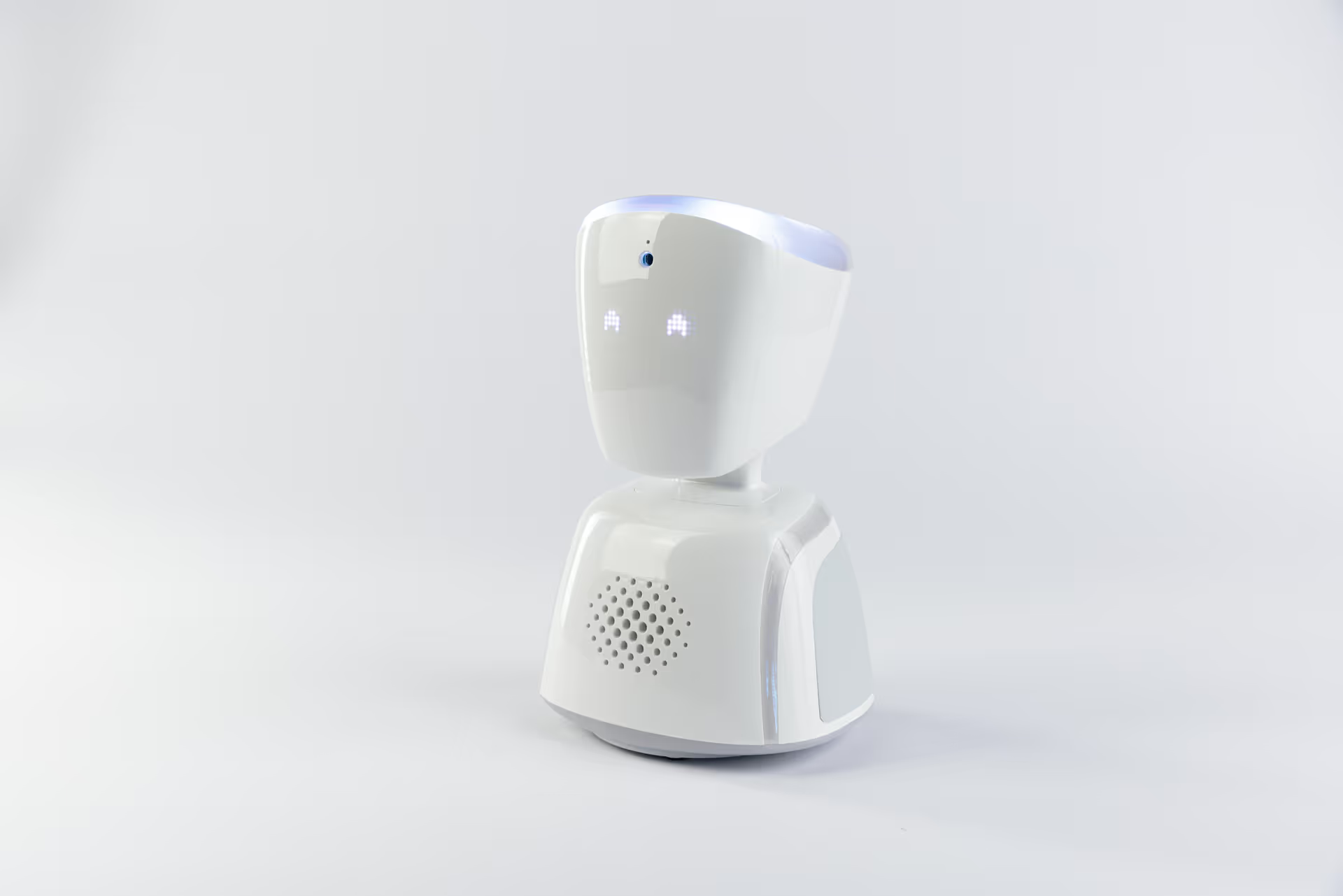
.jpeg)

.png)