
How AV1 Robots Supported Reintegration for Pupils with EBSA and Anxiety
How a rural school keeps pupils connected when attending feels impossible
%20template%20(11).png)
Kinver High School in South Staffordshire has seen a sharp rise in anxiety, emotionally based school avoidance and complex attendance needs. Sophie Roberts, SENCO, has been guiding a large number of pupils through reintegration plans, and AV1 has become a valued route back into learning and belonging during challenging school periods.
➡ Visual created using AI for illustration purposes.
A Rural Secondary Working Hard to Reduce Absence
Kinver serves a wide catchment across several villages and rural communities. Many families travel long distances, and the school runs several different support pathways for pupils who struggle with large environments, travelling to school, or prolonged anxiety around attendance. Sophie oversees assessment, liaison with health and mental health professionals and day to day reintegration planning.
Before AV1, staff often relied on a mixture of half days, simplified work packs and gentle exposure to quieter parts of the building. Workload pressures meant that online alternatives could involve duplicated resources or hurried video links, which left pupils feeling disconnected and teachers having to redesign learning. The school wanted a gentler route back into mainstream lessons without compromising continuity.
A Flexible Presence Without Overwhelm
Kinver received their first AV1 earlier this year and began using it with a pupil who experienced sustained emotional barriers to entering the classroom. Rather than staying at home, the pupil attended the school site and accessed lessons from a dedicated safe space. Live lessons were delivered by the pupil’s teachers in real time which meant there was no backlog of content to resolve later.
Sophie and the team positioned AV1 carefully so that the learner could see the board, hear the teacher and join partner tasks when they wished but without expectation to speak. Over time the pupil learned that reintegration was a process rather than a sudden step. Classmates quickly accepted the robot as a natural part of the environment. It was carried between lessons by a trusted peer and charged overnight in the SEND office.
The routine became predictable. Teachers taught normally, the learning assistant knew when to switch on and off, and the robot gave the pupil control over when to listen, when to contribute and when to sit quietly.
A Sense of Classroom Identity
Sophie noticed that pupils using AV1 gained dignity that traditional online learning had never provided. Pupils were a seat in the room rather than a camera in a bedroom. Teachers could maintain normal expectations around learning rather than redesigning content for remote access. A child could raise a virtual hand or communicate through simple facial responses on the robot without needing to present themselves visually.
The school saw pupils taking part in drama, small group projects and creative tasks without needing to move spaces. A teaching assistant described how the robot allowed the pupil to feel involved socially even if they were not ready to speak. Pupils sitting near the robot often treated it as if speaking directly to the learner. This preserved friendship rhythms that are vital to wellbeing and reintegration.
Attention to Family Confidence
Families have been relieved to know that progress is protected and that their child remains connected academically and socially even if they require periods of absence. Parents have felt reassured that teachers are working with their own class and that the child is not trying to follow generic materials or self-directed packs. The emotional benefit has been significant. Instead of fearing that every setback produces a larger gap, families feel able to support small, gentle steps.
Some families do not want cameras in their home or do not want to supervise online learning in a domestic space. AV1 gives one-way visibility into school learning without placing the family under pressure to manage technology. When the pupil needs calm or privacy the robot can be switched off without disruption to teaching.
Gradual Reintegration With Safety at the Centre
Kinver High School has a strong culture of graduated return. For pupils who are extremely anxious or have sensory or social vulnerabilities, a full classroom return can feel overwhelming. Sophie’s team use AV1 to help pupils become fluent in current topics before that return takes place. When the pupil eventually enters a classroom, they recognise the task, the teacher, the vocabulary, and the pace. This protects dignity because the pupil does not need immediate additional support or overexplanation to catch up.
One of the most encouraging examples was a pupil who had never attended in person for months. He began using AV1 solely for the school’s train club, which operates twice a week. His special interest meant he connected deeply with the activity. He watched, listened and became familiar with peers and group routines. Later he gained enough trust to sit in a car and travel for short periods, which had been impossible before. This single step mattered enormously to the family and created a sense of possibility.
Staff Confidence and Simple Integration
Teachers at Kinver had early questions about privacy and whether anyone at home could observe conversations or take screenshots. Sophie reassured colleagues, explained the one-way viewing model and shared guidance. Staff learned quickly that AV1 does not change lesson planning and does not add preparation. They teach as normal and trust that the robot remains a seat in the room whose behaviour is predictable.
Confidence has grown to a point where the robot no longer feels like technology. It is part of the class. New teachers, support staff and visitors follow the same routine and rarely need prompting.
Future Potential for Emotional Regulation
The school is exploring whether AV1 could support pupils inside the building on difficult days when regulation becomes challenging. Instead of leaving learning spaces and losing curriculum access altogether, a pupil could move to a quieter area and continue to access the same live lesson. Sophie believes that this would significantly reduce the sense of failure some pupils experience during a dysregulation episode because they would remain included.
Kinver are also considering longer transition planning for pupils who are due to move into the school from primary or from other settings. A new pupil could complete a short virtual tour or observe a lesson with AV1 before stepping into the building for the first time. This may become part of the school’s induction offer where anxiety is high.
A Practical and Compassionate Pathway Back
Kinver High School have found that AV1 is most powerful when used as a bridge. It helps pupils sustain progress, stay connected with peers and avoid the fear of returning to unknown content. It reduces workload pressure because teachers continue to deliver learning as normal. It protects family wellbeing and it gives children control over how and when they participate.
The Bottom Line
Kinver High School have demonstrated that remote presence can be dignified, relational and academically meaningful. When combined with strong reintegration planning and family partnership, AV1 provides a route back into school that honours emotional safety while keeping learning alive. The school has created an approach that gives pupils presence, continuity and a realistic chance of returning confidently when the time is right.

A transformational solution to attendance and reintegration.
Talk to an expert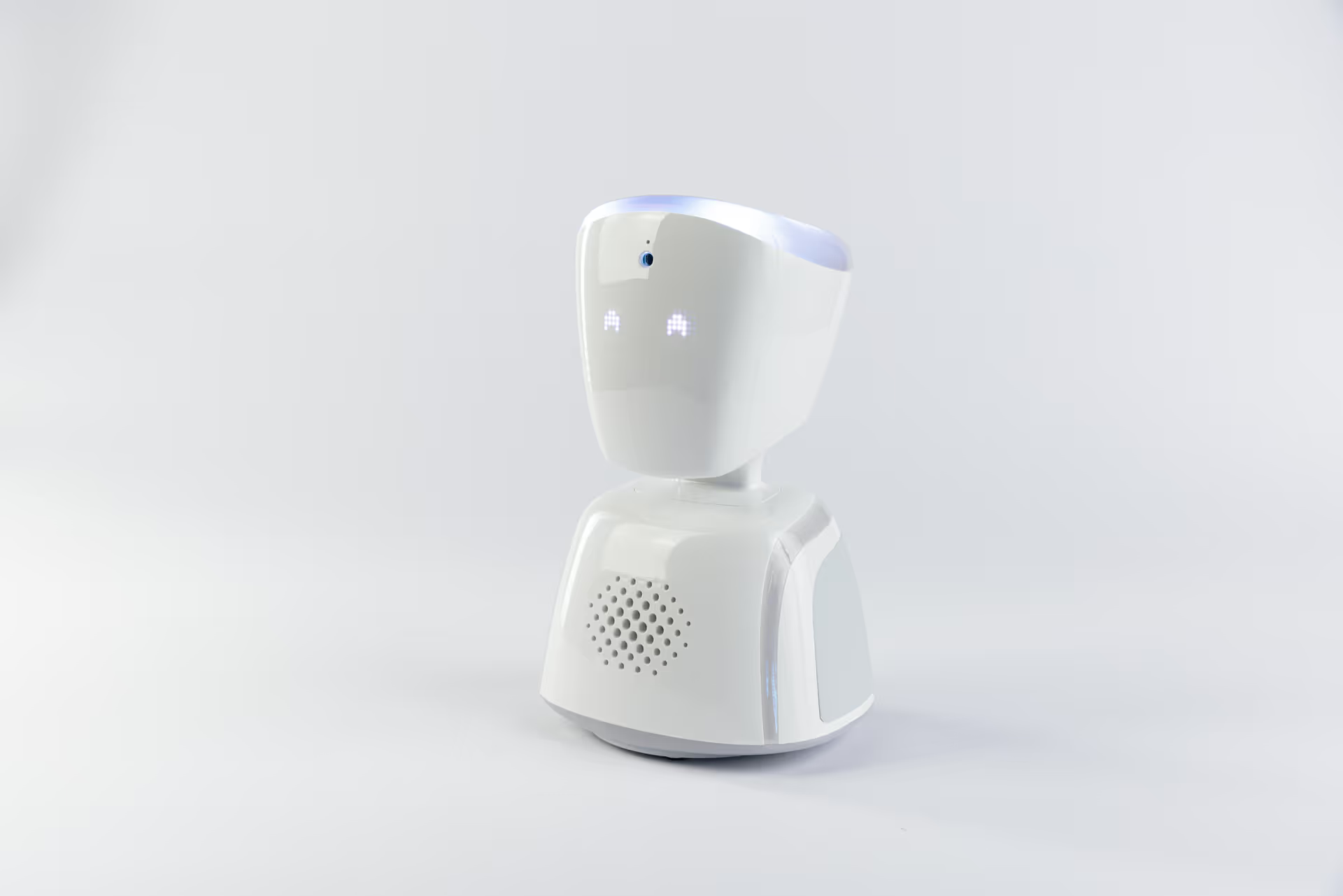
.jpeg)

.png)