Reducing Overwhelm and Rebuilding Confidence through AV1 Telepresence Robots
Helping students stay engaged when the classroom environment is a barrier.
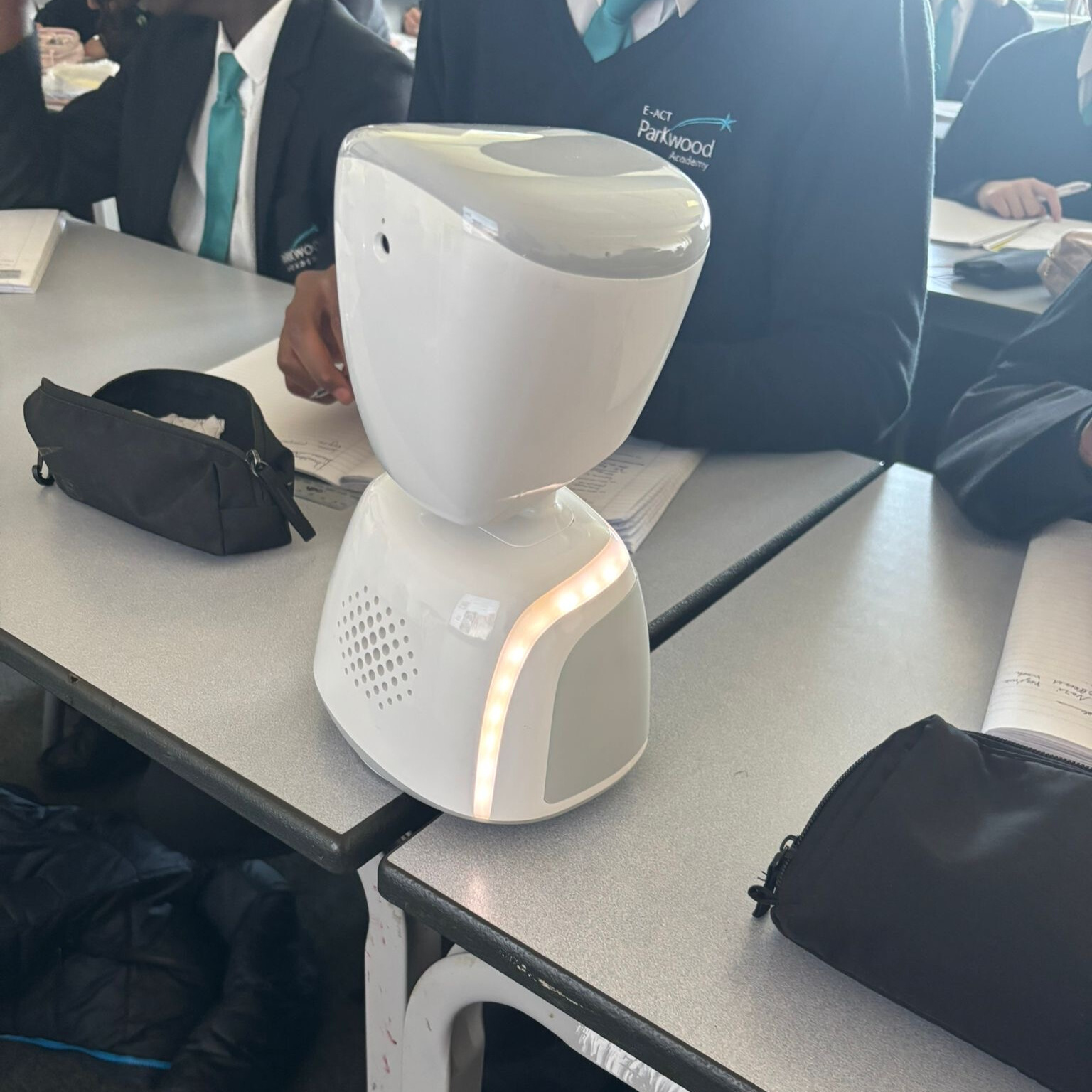
At E-ACT Parkwood Academy in Sheffield, inclusion sits at the centre of school life. Serving a diverse urban community with high levels of pupil premium, a large EAL cohort and frequent in-year admissions, the school regularly supports students facing complex barriers to learning.
For Deputy Headteacher for Inclusion Sarah Windle, one challenge in particular had become increasingly difficult to solve: how to support students who were academically capable, but unable to consistently cope with the classroom environment.
“Some students were physically in school,” she explains, “but they weren’t able to access their learning. The environment itself was overwhelming.”
The team had already explored a wide range of strategies. Support spaces were in place, staffing was carefully planned and adjustments were made wherever possible. Yet for a small group of learners, the barrier was not motivation or ability. It was the sensory and emotional pressure of a full school day.
A student at risk of losing access to learning
The school’s first use of AV1 began with a Year 11 student with autism who was achieving well academically but struggling to sustain attendance across a full timetable.
The busy classroom environment was proving overwhelming. Daily incidents of crisis were common and staff were often unsure whether he would be able to complete the day. Exams in particular were a significant concern.
“We were having daily conversations about what we could do next,” says Sarah. “We were constantly having to intervene or call home because he couldn’t cope with the day.”
Despite strong academic potential, the student was at risk of missing learning in key GCSE subjects simply because remaining in lessons for extended periods was too much to manage.
Introducing a lower-pressure way to participate
Sarah had first encountered AV1 at a conference and had been struck by the possibility of providing access without increasing pressure. When the situation escalated, the school decided to try a different approach.
The student was gradually introduced to the robot, initially using it alongside staff before accessing lessons independently from a quiet space within the school’s SEND hub.
The impact was immediate
Through AV1, he could attend lessons using an iPad, choosing when to actively participate and when to listen passively. The option to remain present without speaking proved particularly important.
“It’s taken away the discomfort and anxiety that stopped him engaging with learning,” Sarah explains. “He knows he has a backup. If he becomes overwhelmed, he can still stay connected.”
The student reported feeling more confident about his GCSEs and was able to catch up on gaps in learning that had previously built up.
From daily crisis to sustained engagement
Before AV1, the student regularly experienced distress during the school day and often left lessons or walked the building to cope. Staff were frequently managing incidents and supporting recovery.
Within three months of using the robot, the pattern had changed.
During his previous mock exam series he had been unable to complete several papers. In the most recent mocks, he completed around twelve exams, with only one brief difficulty.
“We’re no longer dealing with daily crises,” says Sarah. “His anxiety is lower because he knows the option is there.”
The difference was not only visible in exams. He was able to manage the school day more independently and remain engaged with teaching for longer periods.
Supporting independence and reducing staff pressure
The school quickly built AV1 into its routines, giving the robot a timetable and integrating it into normal classroom practice. Staff understood its purpose and students became familiar with it.
Because the student could regulate his own participation, staff intervention reduced significantly.
“We’re not constantly responding to incidents anymore,” Sarah explains. “He’s more independent, and that means we can support other students too.”
Teachers also found practical benefits. They could adjust the robot’s position to support learning, while the student valued the ability to listen without being required to speak.
For the school, one of the biggest changes was emotional as well as practical.
“Not having to witness a child in distress every day - that’s the transformation for me.”
Expanding support to more students
Following the success of the initial placement, the school identified other students with similar needs, particularly those with autism and high anxiety linked to attendance difficulties. Trials have already begun with additional pupils and the school is planning wider use.
The experience has also changed how staff think about provision.
“It reassures you that you’re doing everything you can,” Sarah says. “We can’t always do what we’ve always done. Sometimes we need to be creative.”
Highlighting AV1 as a valuable investment, Sarah explained the impact AV1 has had, particularly for hard-to-reach students where other approaches have failed.
It reduces staff workload by supporting student independence, improves attendance and academic outcomes, and provides a cost-effective way to ensure vulnerable learners can achieve their potential.
Advice for other schools
For schools considering AV1, Sarah emphasises preparation and communication. Introducing the robot to staff and students, explaining safeguarding clearly and embedding it into normal school routines helped ensure confidence across the school community.
But her main message is simpler.
“If students aren’t able to succeed with traditional approaches, you have to try something different. If a piece of technology can help a student access education when they otherwise couldn’t, it’s worth it.”

A transformational solution to attendance and reintegration.
Talk to an expert

.png)