
How a Multi-Academy Trust School used Telepresence Robots to Improve Attendance
South Dartmoor Community College used AV1 to widen their inclusion offering.
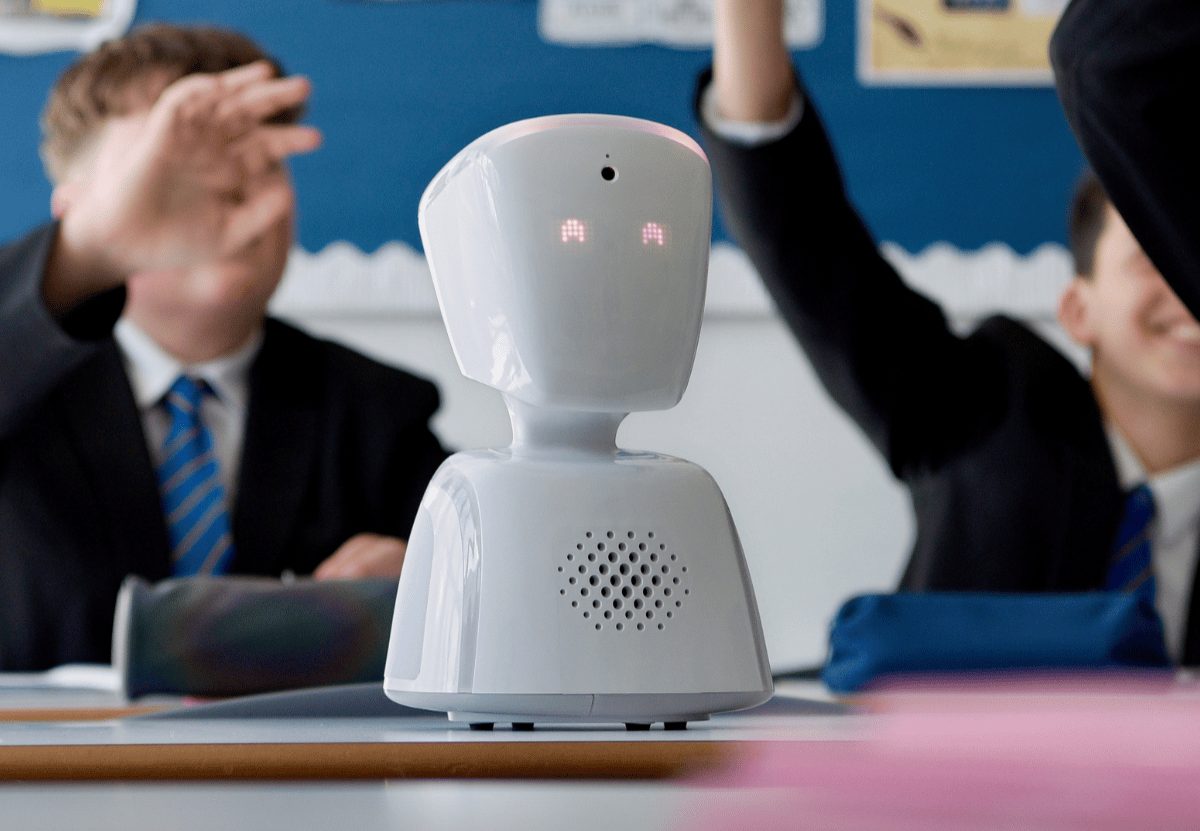
South Dartmoor Community College (SDCC) is a mainstream secondary school with a well-established inclusion offer spanning Cognition & Learning (C&I), SEMH and wider SEND support.
At the point of introducing AV1, the school already had comparatively strong attendance and positive behaviour data relative to national trends, alongside a committed inclusion team and a clear graduated response model.
However, leaders recognised that despite these strengths, there remained a smaller but significant cohort of pupils for whom context-specific barriers were becoming increasingly difficult to resolve within traditional structures.
These challenges were not about system failure, but about the practical realities of a large mainstream environment:
- Class size and sensory load
- Competing complex needs within cohorts
- Transition-related anxiety (particularly Year 6 → Year 7)
- Fluctuating engagement linked to EBSA and neurodiversity-related burnout
- Subject-specific anxiety emerging over time
The school’s ambition remained consistent: pupils should access learning within mainstream classrooms wherever possible. However, leaders also recognised the need for a more flexible model that could sit alongside existing provision and strengthen it further.
The Challenge
SDCC identified a small but persistent group of learners whose barriers to attendance and engagement were highly situational and often fluctuating.
These included pupils:
- Experiencing EBSA and anxiety-related attendance dips
- On neurodiverse pathways experiencing periods of burnout
- Struggling with the scale and pace of secondary transition
- Impacted by sensory demands of specific classroom environments
- Beginning to disengage through internal exclusion or repeated lesson removal
- At risk of becoming persistently absent by Years 9 and 10
A common theme across students was not rejection of learning itself, but difficulty accessing it in specific environments:
“I can’t go into class. There are too many people.”
The school also recognised that internal intervention, while necessary at times, could unintentionally increase missed learning and create further secondary barriers to engagement.
Decision to introduce AV1
SDCC was introduced to AV1 through Devon Local Authority. SDCC had developed a regional reputation for innovation in supporting inclusion and the AV1 units would support the current offer.
Initially, AV1 was adopted as a targeted intervention for pupils already experiencing significant barriers to attendance. It was not viewed as a replacement for existing provision, but as an additional tool within a well-developed inclusion framework.
Importantly, the school’s approach was additive rather than corrective—AV1 was used to enhance an already strong offer, not to replace it.
AV1 as a Bridge Into School
AV1 is used flexibly as part of the school’s wider inclusion offer, acting as a bridge to help pupils stay connected to learning when they are not able to be in the classroom. It enables students to access live lessons from supported spaces within the school, ensuring they remain on site, supervised, and engaged with their learning alongside peers and teachers.
AV1 sits within a broader graduated approach that includes pastoral support, mentoring, phased timetables and other targeted interventions, and is most effective when used as part of this wider system rather than in isolation.
From reactive support to a hybrid inclusion model
Over time, SDCC moved from viewing AV1 as a reactive intervention to recognising its value as part of a hybrid model of inclusion.
This hybrid approach allows pupils to:
- Remain connected to mainstream learning
- Reduce exposure to triggering environments when needed
- Transition gradually back into full classroom participation
For a small minority of learners, AV1 has also enabled the school to reduce reliance on external alternative provision, strengthening both belonging and cost-effectiveness while keeping pupils within their home school environment.
Preventative impact
While initially used reactively, leaders now see strongest value in early intervention:
- Year 6 → Year 7 transition support
- Early signs of attendance decline
- Emerging subject-specific anxiety
- Early withdrawal patterns from specific lessons or teachers
The school’s reflection is clear:
“The AV units alongside a strong internal offer would have enabled us, through early intervention, to have more impact on some of the higher tariff situations”
How It Works Day-to-Day
AV1 is used flexibly across the school depending on need. Students may access lessons through the robot from:
- Inclusion rooms
- Soft landing spaces
- Attendance support bases
- Wellbeing rooms
- Reflection areas
This means pupils remain on site, supervised, connected to live lessons and part of the school day, even when they are not yet ready for full classroom reintegration.
The school has also used AV1 for behaviour support. Instead of a pupil being removed from learning entirely, they can continue attending the same lesson remotely from another space, preventing further learning loss.
AV1 is always used alongside wider support such as:
- Therapeutic check-ins
- Mentoring
- Wellbeing provision
- Phased timetables
- Catch-up learning
- Trusted adult relationships
The school was clear that AV1 works best as part of a broader graduated response.
Student impact example
One Year 10 pupil, previously disengaged from mainstream learning at a different setting for an extended period, accessed AV1 as part of a phased reintegration plan.
Through AV1 she was able to:
- Re-engage with GCSE English lessons
- Access Photography
- Gradually re-enter selected Maths lessons in person
- Rebuild peer relationships
- Re-establish a sense of belonging
She ultimately achieved 98% attendance, the highest in her year group.
Staff reflected:
“Without the robot, she would not be where she is now.”
Subject-specific anxiety recovery
The same pupil initially experienced severe maths anxiety, to the point where the subject could not be discussed without distress.
AV1 enabled a structured, low-pressure approach:
- Observe lessons safely from distance
- Remove immediate performance pressure
- Rebuild confidence gradually
- Reintroduce participation step-by-step
This revealed underlying capability that had been masked by anxiety rather than ability.
Behaviour and inclusion use
AV1 is also used as an alternative to exclusion-based approaches. Pupils placed in reflection or inclusion spaces can remain engaged in live lessons rather than missing curriculum content.
This has helped:
- Reduce learning loss during behavioural incidents
- Maintain continuity of lesson routines
- Support calmer reintegration
- Prevent escalation cycles linked to exclusion
Parent partnership and accountability
AV1 has strengthened conversations with families where attendance expectations had previously become difficult to maintain.
Rather than replacing school attendance with remote learning, AV1 provides a supported in-school adjustment.
This reinforces:
- Continued access to education for the pupil
- Reasonable adjustment by the school
- Maintained attendance expectations
- Clearer shared accountability with families
As leaders described:
“The school is taking some power back.”
Looking ahead
SDCC’s learning is that AV1 is most powerful when embedded in a wider graduated response
- Transition from primary to secondary
- Signs of attendance decline despite reasonable adjustments
- Emerging emotional or sensory overwhelm
- Early subject avoidance behaviours
The school is now exploring a more structured, timetabled approach to AV1 use across cohorts.
Wider model of success
AV1’s impact is maximised as part of a wider system including:
- Therapeutic and pastoral support
- Mentoring relationships
- Soft landing provision
- Phased reintegration pathways
- Trusted adult consistency
Operational learning
Key insights include:
- Staff training improves consistency and impact
- Timetabling AV1 increases utilisation and equity of access
- Subject suitability varies and should be considered in planning
- Future opportunity for school to use more AV1 robots in a cohort-based way to support pupils with low-level SEMH or neurodiverse needs
Funding & value
The school identified that AV1 has the potential to reduce reliance on high-cost alternative provision and online tuition models, while improving continuity of learning and student belonging.
“If we had this earlier, some students may never have reached crisis point.”
They noted that even small numbers of students re-engaging meaningfully can drive significant whole-school gains:
“Small numbers can make big gains.”
Key outcomes
- 98% attendance achieved by a previously disengaged Year 10 pupil
- 1 pupil became highest attending in Year 10after phased AV1 reintegration
- AV1 now supports multiple use cases such as EBSA, behaviour, reintegration and year 7 transition

A transformational solution to attendance and reintegration.
Talk to an expert

.png)