
Extending Inclusion Beyond the Classroom Through AV1 Robots
At West Lakes Academy, inclusion is built around early intervention and individual need.
%20(2).png)
With around 1,100 pupils on roll from Year 7 to Year 13, the school combines mainstream provision with an internal alternative provision, West Lakes Connect, designed to support students facing barriers to education.
For Ellie Shaw, West Lakes Connect AP Manager and Deputy DSL, the focus is always on identifying those barriers early and finding practical ways to remove them.
A big part of it is early intervention,” she explains. “Every child is a unique individual, and our priority is to truly understand who they are, what they need, and implement strategies so they can feel safe, supported, and able to access their education.”
That approach has shaped the school’s use of AV1.
Creating an extension of the classroom
West Lakes Academy was first introduced to AV1 through the local authority, initially for a student who was unable to attend in person but still wanted to learn. While that early trial brought only “marginal success”, it helped staff understand both the potential of the robot and the conditions needed to make it work well.
As the school’s internal provision developed, so did its thinking.
Within West Lakes Connect and the school’s Tailored Learning Centre, staff support students experiencing emotionally based school avoidance, anxiety, bereavement, mental health challenges and sensory overwhelm. For some, the size and pace of a busy secondary school makes mainstream lessons difficult to access even when they are on site.
That is where AV1 found a natural place.
“We thought the robot would actually fit perfectly with extending that provision even further,” Ellie says. “To make us an extension of the classroom.”
The school now has six robots commissioned through the local authority, used in different ways for different students. Some access lessons from home, while others join lessons via AV1 from the school’s quieter on-site provision.
Re-engaging a Year 11 student after prolonged absence
One of the clearest examples of impact has been with a Year 11 student who had previously attended school full time until December 2023.
After the Christmas break, he struggled to return. A phased return was implemented from January 2024 to March 2024 to support re-engagement, but this was unsuccessful. From March 2024, his absence became complete.
Staff tried a wide range of approaches. They put reduced timetables in place, arranged home visits every third day, offered activities linked to his interests and involved external services. Nothing proved sustainable.
The student himself explained that part of the difficulty was social. As friendship groups changed, he found it hard to manage. He no longer felt comfortable with the behaviour of some peers, but did not feel able to form new friendships either.
“He was really at a loss,” Ellie says. “And by default he then just removed himself from school.”
Before introducing AV1, staff created a gentler online step through wellbeing-focused sessions run from the Tailored Learning Centre. The student engaged well with those sessions, but the move from online contact back into the building remained too great.
“That’s where it stopped,” Ellie explains. “So that’s how we got onto the robot.”
The student began accessing AV1 in November 2024.
From remote access to attending mock exams in person
Once the robot was introduced, the response was immediate.
“We tried the robot and it just worked,” says Ellie. “He was willing to give it a go.”
The student began completing his learning through AV1, maintaining access to lessons despite not being able to cross the physical and social barrier of returning to school in person. Over time, that continuity helped him stay connected to the curriculum and prepare for key assessments.
Most significantly, he then came into school in person for his mock exams.
“If it wasn’t for the option of a robot for him to be able to access his education, there is no way he would have had an education,” Ellie says.
His mock outcomes reflected that continued access. In English Language, his minimum expected grade was a 5 and he achieved a 5-. In Maths, where a 5 was expected, he achieved a 4. In Combined Science, he achieved the expected 5/5.
For a student who had experienced complete non-attendance, those results mattered.
“To even get anywhere close,” Ellie says, “that’s impact.”
Helping students belong, even when they are not in the room
At West Lakes Academy, AV1 has supported more than academic access. It has also helped preserve a sense of belonging.
In one classroom, students have embraced the robot so fully that they “fight to have Roger on their table” during group work. In others, teachers have found that the presence of the robot encourages a calmer atmosphere, because pupils know their classmate is listening from behind the screen.
Staff have also seen how AV1 can help students in the Tailored Learning Centre build confidence in other ways. Pupils who struggle to access mainstream corridors are given responsibility for helping deliver the robots to lessons, accompanied by staff or sixth formers. The task gives them a reason to move around the site and a structured way to re-enter parts of school life.
“We use them as a walking tool to get them out of the room,” Ellie explains.
For families, AV1 has also improved communication. When one student began joining lessons from the Tailored Learning Centre, subject teachers were able to email home with positive updates such as: “It was really nice to see Anna in the lesson. She even raised her hand to answer one of the questions.”
That kind of feedback mattered. Previously, home had mainly heard from pastoral staff. AV1 made it possible for classroom teachers to reconnect with the family too.
Embedding a more structured approach
As use of the robots has grown, the school has become more deliberate about how they are introduced and reviewed.
There is now a clear process around implementation, expectations and review points. Families receive updates on attendance and engagement, weekly check-ins are built in, and after three weeks the school assesses whether the placement is working. If a student is not accessing the robot at all, provision is reviewed so that support can be directed where it is most needed.
For Ellie, that structure has helped staff use AV1 more effectively and think more creatively about when it might help.
“It’s just opened the robots more in the forefront of my mind now to be more creative with them.”
Advice for other schools
Ellie’s advice to other schools is simple.
“Do it. Just do it.”
For her, the value of AV1 is not that it replaces attendance. It is that it prevents connection from being lost altogether.
“There is going to be a small number of students that actually, we will never get them in the building,” she says. “But luckily now with a robot, not all is lost because of that.”
Used thoughtfully, AV1 has become a practical way for West Lakes Academy to continue doing what inclusion asks of schools every day: to keep finding a way in.

A transformational solution to attendance and reintegration.
Talk to an expert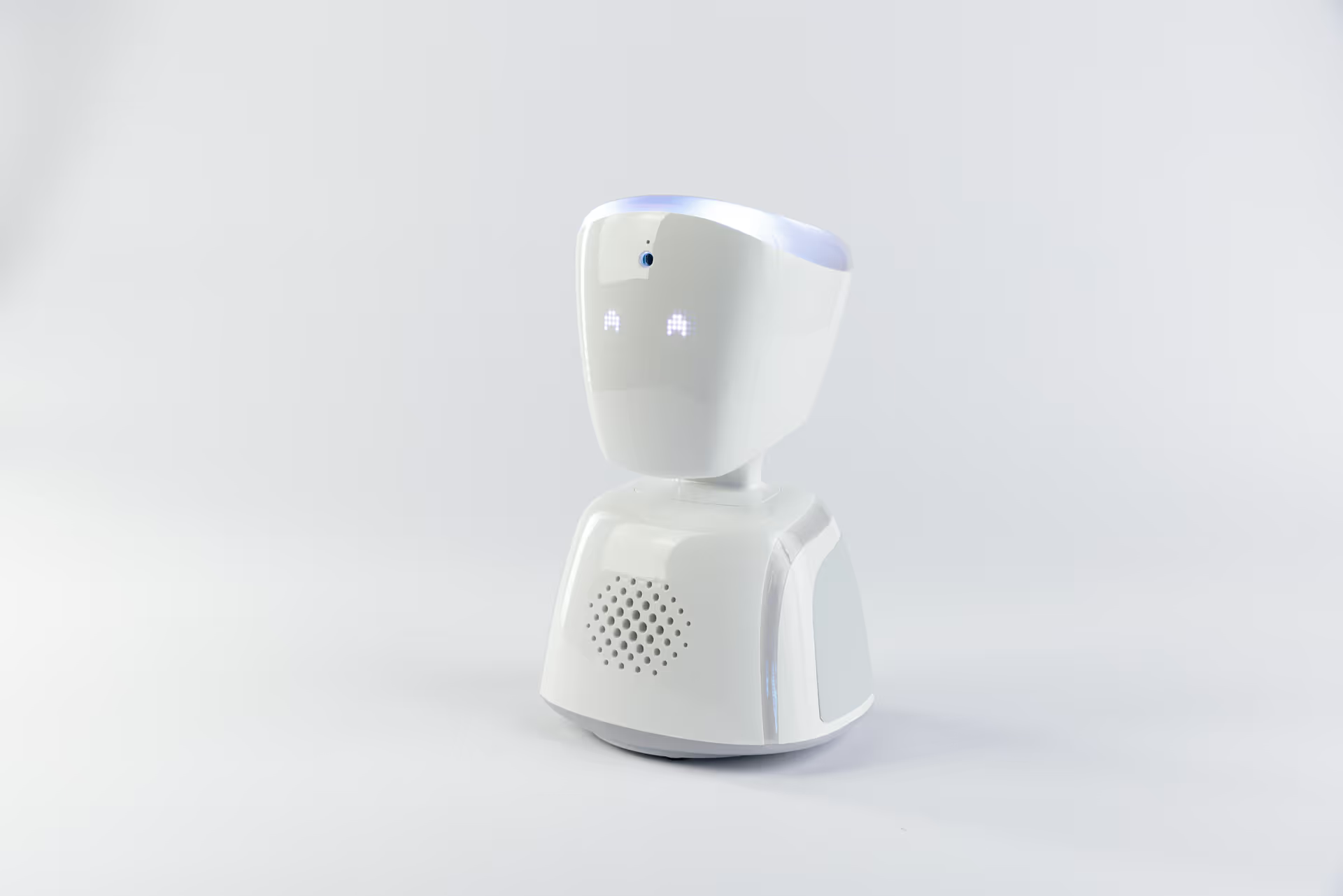
.jpeg)

.png)