Keeping Pupils Connected to Learning: Lift Wishmore’s Approach to Reintegration with AV1
How Lift Wishmore uses AV1 to support belonging, reduce disengagement and help pupils reintegrate
%20template.jpg)
Lift Wishmore is a specialist educational setting based in Surrey and part of the national LIFT Schools multi academy trust. It supports pupils with a range of additional needs, including SEMH and neurodiversity relate barriers to learning. The school has a strong focus on reintegration, belonging, and reducing disengagement through creative, flexible approaches that keep pupils connected to learning while addressing the individual challenges that can impact attendance and participation.
The Challenge
Lift Wishmore was experiencing increasing reliance on alternative provision (AP), particularly through approaches that involved remote or off-site learning. While well intentioned, some of these models unintentionally led to reduced engagement over time.
● Work sent home was often not completed or fully engaged with
● Off-site AP (e.g. mentoring, outdoor programmes) was positive but sometimes made return to school feel less appealing to students
● Some provision, while engaging, risked further distancing students from the school environment
● Students were becoming more disconnected from the routines, relationships and identity of school life
The key challenge was clear: how could the school maintain support and intervention for vulnerable learners while keeping them meaningfully connected to school on-site?
The goal was not to replace existing support, but to introduce something that strengthened belonging, reduced drift, and kept pupils part of the school community even during periods of disengagement.
Discovering and Implementing AV1
The introduction of AV1, supported by Andrea George-Samuels Associate Director of SEND at Lift Schools and Djmila Izza Principal at Lift Wishmore and the wider team, provided a new opportunity to rethink how inclusion could work in practice.
The early implementation phase was a valuable learning period that helped strengthen both setup and delivery. Initial onboarding required careful configuration of devices and alignment with safeguarding requirements, including updates to school systems and tablets. While this meant a more gradual rollout, it ensured the foundations were secure, compliant, and fully embedded. This approach ultimately supported a safer, more sustainable deployment of the technology.
Two AV1 robots were deployed early and quickly and began to demonstrate impact.
A particularly powerful early example came from a Year 7 student who had recently transitioned from primary school and was experiencing significant anxiety. He had been out of school for 5–6 weeks, including the Christmas period.
Using AV1, he was able to:
● Stay engaged with core subjects such as Maths and English
● Maintain academic continuity during absence
● Join weekly tutor time and reconnect socially with peers
● Attend a school Christmas lunch in person, supported by his reintegration journey
What Changed
The impact of AV1 became particularly clear when comparing attendance patterns and reintegration outcomes for similar students.
● Pupils using AV1 showed stronger continuity of engagement and faster reintegration trajectories
A key shift was that students were no longer becoming fully disconnected from school during absence. Instead, they retained:
● Access to live lessons
● Relationships with teachers and peers
● A sense of belonging to the school community
Parents also played a crucial role in success. One parent, initially hesitant due to limited confidence with technology, quickly became reassured once they saw how simple AV1 was to use and how independently their child could engage.
Staff also responded positively, particularly where need was high and AV1 provided an immediate, practical way to maintain engagement during challenging periods.
A consistent learning across staff was the importance of setup and embedding:
● Ensuring technology compliance from the outset
● Establishing a clear physical base in school for AV1 use
● Supporting students to use the robot independently
● Helping pupils understand there is a real peer “on the other side” of the device
This helped AV1 become part of everyday practice rather than an isolated intervention.
Looking Ahead
Following early success, adoption of AV1 expanded rapidly. By January 2026, the fleet doubled in size, driven by both impact and ambition.
The school is now developing a broader model of inclusive innovation, including:
● AV1 use in on-site inclusion hubs
● Reintegration support through family hub settings
● Planned use within forest school and alternative learning environments
● Targeted support for EBSNA students and those at risk of long-term absence
One emerging example includes using AV1 as a stepping stone for a student transitioning from virtual classroom provision, supporting smoother reintegration where previous digital-only models had limitations eg. guided visit via the Family Hub around the school using AV1.
The long-term vision is to position AV1 not just as a reintegration tool, but as part of a wider early intervention and inclusion strategy that keeps pupils connected before disengagement becomes entrenched.
AV1 has helped Lift Wishmore shift from managing disengagement to actively
preventing it.
By keeping pupils connected to real-time learning, relationships, and school identity, even during periods of absence, the school has strengthened both reintegration outcomes and overall inclusion practice.
The most powerful outcome is not just improved attendance, but the preservation of belonging.

A transformational solution to attendance and reintegration.
Talk to an expert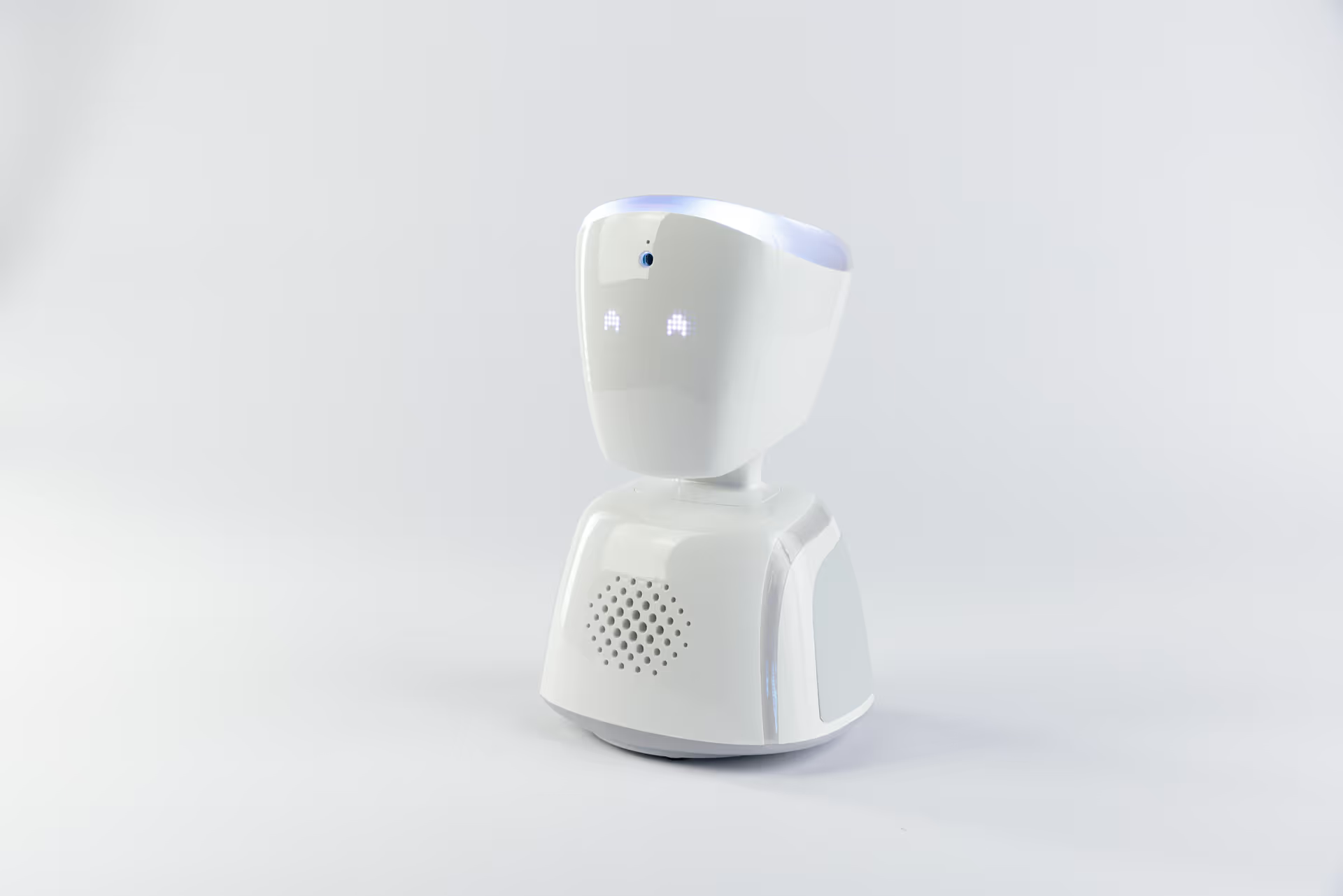
.jpeg)
.png)