
Persistent absence remains a concern
MATs and schools continue to report that persistent absence remains worryingly high, around three times pre-pandemic levels. Vulnerable, disadvantaged, or historically underserved students are often the ones most affected, missing out on vital learning, social connection, continuity in learning and curriculum access. Across trusts, students with SEMH needs, EBSNA profiles, or complex home circumstances continue to experience disproportionate absence.
Absence as a signal, not a problem
No Isolation works with schools that consistently tell us that focusing on attendance alone doesn’t solve persistent absence. Behind the data, there is a story behind every pupil struggling to access learning, whether due to anxiety, overwhelm, or a loss of connection to the classroom. Tightening procedures may improve visibility, but it rarely addresses the underlying barriers to engagement.
As our school leaders explain, many young people operate in what Jenny Anderson and Rebecca Winthrop call “resister mode,” withdrawing from school when the environment feels too demanding or unsafe, when they lack control over their learning, or when returning feels overwhelming. Skipping lessons or avoiding school is rarely defiance, it is communication. Schools tell us they need to focus on creating agile conditions where students feel able to re-engage academically, socially and emotionally. Have school leaders navigated every solution?
Agency drives engagement
Our MAT and school customers report that engagement improves when students have a voice, choice, and ownership over their learning. Disengaged students often experience the opposite: rigid expectations and one-size-fits-all approaches. Re-engagement, therefore, is about restoring agency, not enforcing presence.
For students facing EBSNA challenges or complex barriers, a full-time return can feel socially overwhelming, academically exposing, and emotionally unsafe. Schools tell us that flexible, personalised pathways allow gradual reintegration without lowering expectations. Engagement grows when students move from passive recipients of learning to active participants, a shift schools see reflected in improved confidence, social connection, and classroom participation.
Connection prevents compounding absence
Maintaining relationships with peers, teachers, and the rhythm of school life is critical. Once lost, absence compounds, impacting both progress and a sense of belonging. Rebuilding these connections after a long absence is far harder than maintaining them in the first place, making early intervention essential.
Case in practice: Reducing overwhelm and rebuilding confidence
For some students, it’s not learning itself they are avoiding, but the overwhelm of the classroom environment.
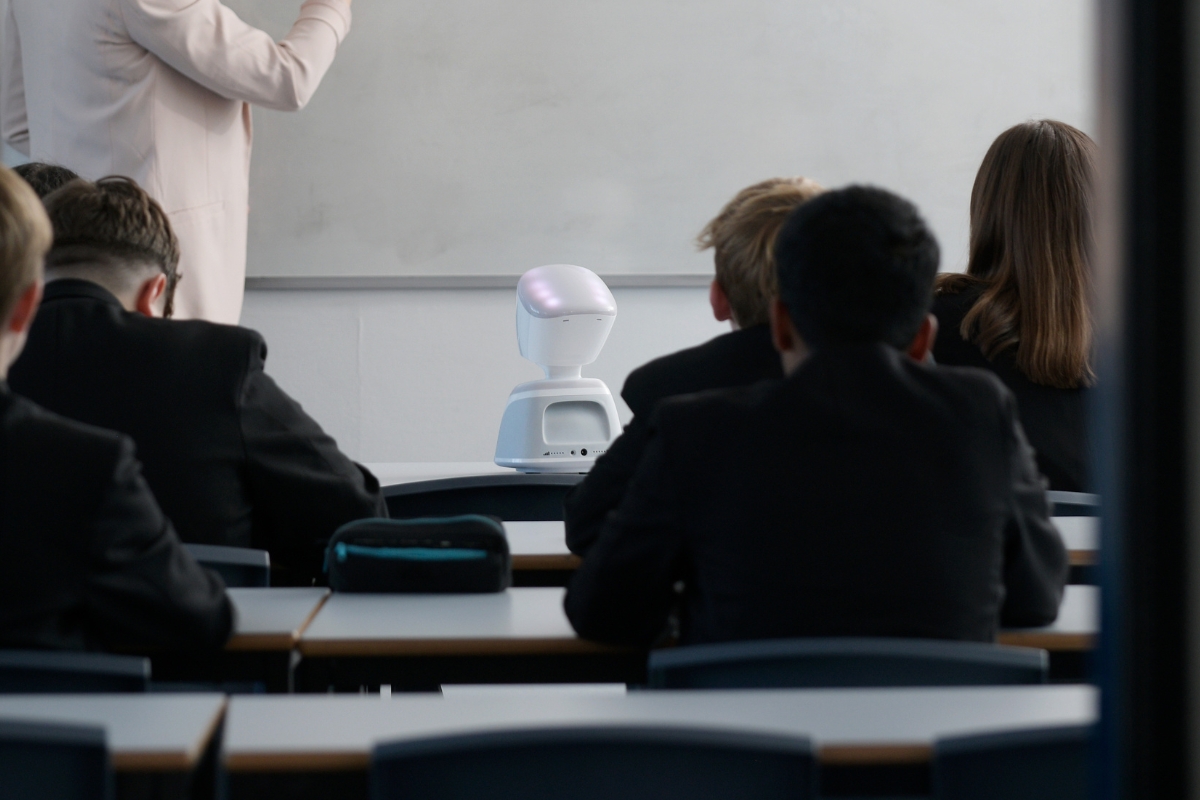
At E-ACT Parkwood Academy, staff recognised this early. For some students, returning to a busy classroom felt too much, too soon. Rather than forcing a full return, the school introduced AV1 to provide a lower-pressure way back into learning.
As one school leader reflected:
“The first student to use the AV1 felt integrated into the classroom as if they were never out of it.”
This consistent connection helps reduce anxiety, rebuild confidence, and create a more manageable pathway back into the classroom. Crucially, students remain part of the class community while regaining the confidence needed for a full return.
.jpg)
Technology as a bridge for students and staff
Schools report that assistive technology can support by:
- Providing low-pressure access to lessons and social interaction
- Enabling gradual reintegration at the student’s pace
- Maintaining peer and teacher connections
- Maintain student’s continuity of learning
- Ensuring curriculum continuity while reducing staff workload
- Supporting longer-term cost efficiencies by reducing reliance on alternative provision
Technology restores student agency while enabling teachers and leaders to manage reintegration in a sustainable, scalable way.
From compliance to reintegration
Schools tell us that shifting the focus from:
“How do we get students back?”
to
“How do we create the conditions for reintegration?
is critical. This reframes the conversation around student experience, curriculum access, social connection, and long term inclusion - rather than short-term attendance metrics alone.
Act now: make the final term count
The final term of the academic year is a critical opportunity to prevent disengagement from becoming entrenched over the summer. Prioritising agency, connection, flexible pathways, and supportive tools ensures students start September reconnected, engaged, and ready to learn; academically, socially, and emotionally.
If non-attendance is a signal, agency is the response, and the final term of the academic year is now the time to act to change the approach in support of these vulnerable students. As a MAT leader recently said to me, MATs can’t afford not to. AV1 is a route back to the classroom, and we know education transforms children and young people's lives.
Harriet Gill Head of Trust Partnerships, No Isolation
For your AV1 MAT consultation, contact us.