Why Student Absence Is a Community Problem, Not Just a Student Problem
I have spent nearly thirty years working in K–12 education. One thing has been consistent across all of the roles I have served in schools, districts, and K12 ed tech. When attendance drops, the impact never stays contained to the student who is absent.
We often talk about attendance the same way we talk about reading or behavior. It is something to monitor, something to intervene on, something that lives neatly inside a tiered system of support. But attendance is different. Attendance is foundational to everything else schools do. And when it falters, the system, not just individual students or staff, feels it everywhere. And with chronic absence now affecting nearly one out of every three students, a different approach is needed.
It Starts With One Student, But It Does Not End There
When a student is absent, learning is interrupted. That part is obvious. What is less obvious is what happens next.
Teachers adjust pacing and content gets abridged. Lessons get retaught. Group work becomes uneven. Classroom routines become harder to stabilize. Students who are present feel the disruption, even if they never miss a day themselves. As a classroom teacher, I saw this firsthand. Absence changes the learning environment for everyone in the room. It increases instructional complexity and emotional load at the same time.
Attendance may show up in data as an individual metric, but in practice, it behaves like a classroom condition.
Classrooms Absorb the First Shock
Classroom costs are fixed. The teacher is there. The room is open. There are students who present to learn. When attendance becomes inconsistent, classrooms absorb the strain. Teachers spend more time re-teaching and less time moving forward. Support staff are stretched thin. Behavioral and emotional regulation challenges increase. The classroom becomes harder to manage, not because anyone is failing, but because the system is under pressure.
This is the first place where the idea that attendance only affects the absent student breaks down.
Schools Lose Flexibility Long Before They Lose Funding
At the school level, attendance issues sometimes show up unnoticed at first. Buildings still need to be heated. Staff contracts still need to be honored. Transportation, food service, and student supports continue regardless of daily attendance patterns. When expected attendance does not materialize, schools lose flexibility. Teacher turnover increases and time is spent hiring and training. Allowable funds are diverted from core to tiered supports. Curriculum gets pared down. Time focuses more on only essential programming. Enrichment programs shrink. Mental health supports become harder to sustain.
These decisions affect every student in the building, not just the ones who struggle to attend.
Districts Feel the Compounding Effect
At the district level, attendance becomes a financial pressure multiplier.
In some states, funding drops immediately when students are absent. In others, the impact is delayed. In many cases, districts experience rising costs tied to attendance challenges without seeing immediate funding relief. This is why district leaders often say, “Attendance is killing us, but the formula says it shouldn’t.” They are describing a system where attendance instability increases cost and risk long before it shows up cleanly in a budget line.
Over time, attendance challenges limit a district’s ability to plan, innovate, and invest. Leaders become reactive instead of strategic. And ultimately poor and sporadic attendance correlates with transience and changing enrollment. And enrollment, as we all know, is the funding lifeblood of a school district.
Attendance Needs Systemic Support, But Not All Support Is Equal
Schools are comfortable thinking in tiers. Tier 1. Tier 2. Tier 3. That framework has helped us organize supports for academics and behavior for decades.
Attendance belongs in that same systems conversation. But because attendance is so foundational, because absence is so prevalent, and because the consequences of absence are so destabilizing, it requires urgency-based triaging, not equal distribution of attention across tiers.
In practice, districts may want to concentrate effort in two specific places.
First: Prevention, Before the System Starts Leaking
Prevention is often considered a subset of Tier 1, but for attendance, it deserves targeted focus. If a ship has a hole, efforts to bail water don’t have the desired impact. The holes have to be fixed.
When it comes to attendance, families are essential partners. They have more daily influence over whether a student gets to school than any policy or intervention a system can design. That does not mean blame. It means leverage. Strong prevention starts with partnership between schools, families, and students.
Two things help families partner well to support strong attendance.
- First, understanding why attendance is so important. For example, letting all families know that missing just two days of school a month can add up quickly, placing students at higher risk for academic struggle and not graduating on time.)
- Second, families need to know what helps. For example, letting families know they can improve attendance by supporting a regular, device-free bedtime, for K12 students of any age.
Second: Intentional Focus on Students Who Are Not Present
This is where attendance systems most often break down. Most supports are designed to work when students are physically present. But the students who need the most support are often the ones who are not there. As a result, they sit in a gap where systems struggle to have impact.
It can feel counterintuitive, or out of a school’s locus of control to think about improving attendance when students are not in school. For a long time, that paradox has limited action. New approaches are changing what is possible. What if students could still attend and strengthen a sense of belonging when they cannot be physically present?
New technologies are making that possible. When students remain academically and socially connected during periods of absence, learning continues, relationships stay intact, and belonging is preserved. And that connection becomes the most powerful bridge back to school for good.
Bridging Students Back Without Breaking the System
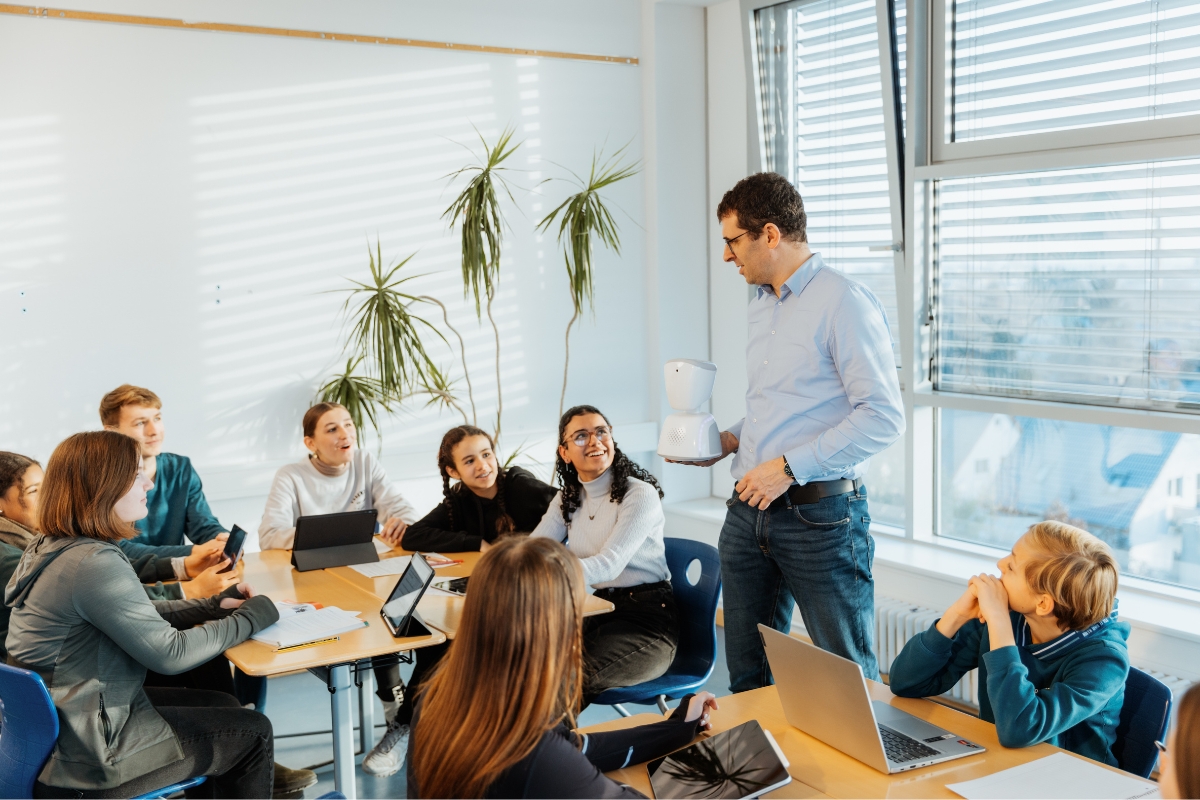
Telepresence offers a critical bridge for students who cannot attend consistently due to medical needs, mental health challenges, or other barriers. When used intentionally, telepresence allows students to remain academically and socially connected while they work toward returning in person. It preserves relationships, routines, and instructional continuity. It also reduces the disruption that occurs when students disappear from the system and then attempt to re-enter later.
Attendance Is an Investment Decision
After years in classrooms, district offices, and edtech strategy rooms, here is what I know.
Attendance is not just about showing up.
It is about protecting learning environments.
It is about sustaining school systems.
It is about strengthening communities.
When districts focus on prevention and intentionally support students who are already absent, they are not just improving attendance rates. They are protecting classrooms, stabilizing budgets, and strengthening the systems that serve all students.
In future posts, I will explore how attendance funding works across states, what absence truly costs districts in dollars, and how leaders can evaluate the return on investment of attendance strategies; and most importantly, how small shifts in practice can improve attendance in a way that improves over time.
Because attendance is not just a metric. It is the foundation everything else stands on.
→ Tools like the AV1 attendance robot from No Isolation are designed not to replace school, but to protect belonging, connection, and stability while students rebuild readiness to return. To learn more about AV1 please contact us.

Kate Pechacek. M.Ed. is a former teacher and district leader with nearly 30 years of experience working in and alongside public school systems. She spent 15 years in classrooms and held multiple district-level leadership roles before moving into education technology strategy. Today, she serves as K–12 U.S. Strategic Consultant for No Isolation and leads OpendoorsEd, where she partners with districts and mission-aligned organizations to strengthen attendance, belonging, and learning conditions for all students. Kate is passionate about practical, human-centered solutions that respect the realities schools face every day.