Summary: Emotionally-Based School Non-Attendance (EBSNA) is a complex challenge driven by severe anxiety, sensory overload, or unmet needs. AV1 is an attendance and reintegration solution that acts as a low-pressure bridge back to class, preserving social bonds and routines to support a confident, phased return.
Understanding EBSNA: Shifting from Enforcement to Support
The prevalence of Emotionally-Based School Non-Attendance (EBSNA) –also referred to as Emotionally Based School Avoidance (EBSA) or school refusal– has risen dramatically in recent years. For parents and educators, finding sustainable, affordable solutions is a critical concern.
EBSNA is not a behavioural problem or deliberate defiance, and it cannot be solved like one. It describes the deep difficulties some school-aged children face when attending school due to emotional factors, often accompanied by severe, debilitating anxiety.
Anxiety can feel different for different people. These are some examples of what it can do to our body and mind:
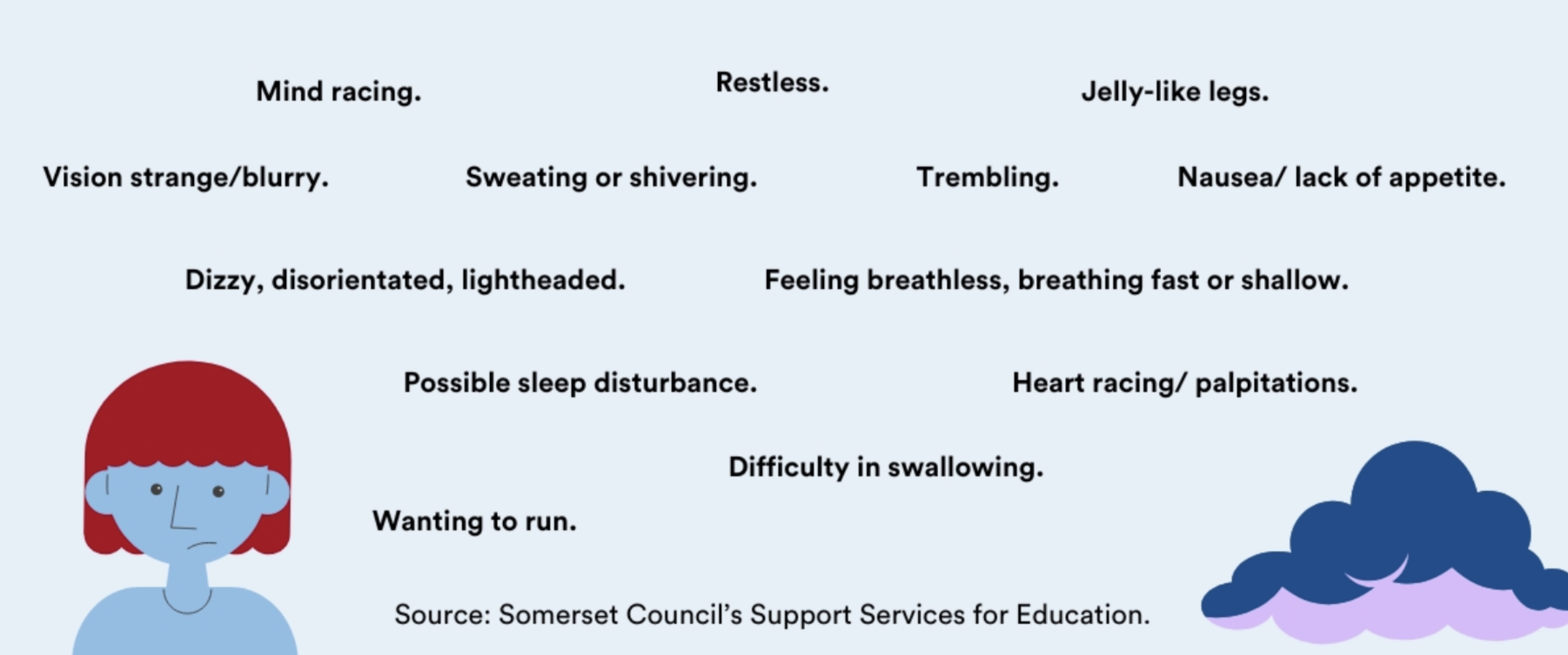
Understanding the emotional and psychological roots of EBSNA is essential for educators and parents. Unlike truancy, EBSNA is driven by overwhelming distress and anxiety that impairs a young person's ability to cope with the school environment.
Key Insights on EBSNA:
- Distress, Not Defiance: As education consultant Sarah Johnson emphasizes, children experiencing EBSNA are often trying their best under difficult circumstances. When we fail to explore underlying causes –such as social anxiety, sensory overload, or unmet Special Educational Needs– we merely treat presenting symptoms rather than root drivers.
- The Compounding Nature of Avoidance: Each week away from school is not neutral; it actively hardens the barrier to return. As routine collapses and peer dynamics shift, anxiety fills the vacuum, making the idea of stepping back into class feel progressively scarier.
- Why Enforcement Fails: Punitive or enforcement-led attendance approaches heighten panic and erode trust. What these pupils need is a safe, relational pathway back. One that maintains connection to school life while wider support plans take shape.
The PACE Framework: Relational Strategies for Re-engagement
To move away from concepts of "refusal" and build true emotional safety, education experts recommend using Dan Hughes' PACE model (Playfulness, Acceptance, Curiosity, Empathy) as a cornerstone for student interactions:
- Playfulness: Opening dialogue through low-pressure, creative methods (e.g., using mood boards or sorting cause-and-effect post-it notes into "yes/no/maybe" piles) helps explore fears without overwhelming the pupil.
- Acceptance: Validating the student's feelings without judgment or dismissal (e.g., saying, "I can see how tough this is for you" rather than "There is nothing to be afraid of").
- Curiosity: Asking open-ended questions without preconceived notions to discover what specific triggers make school feel unsafe.
- Empathy: Connecting emotionally by showing genuine compassion for the distress the child is experiencing.
How Telepresence (AV1) Bridges the Gap
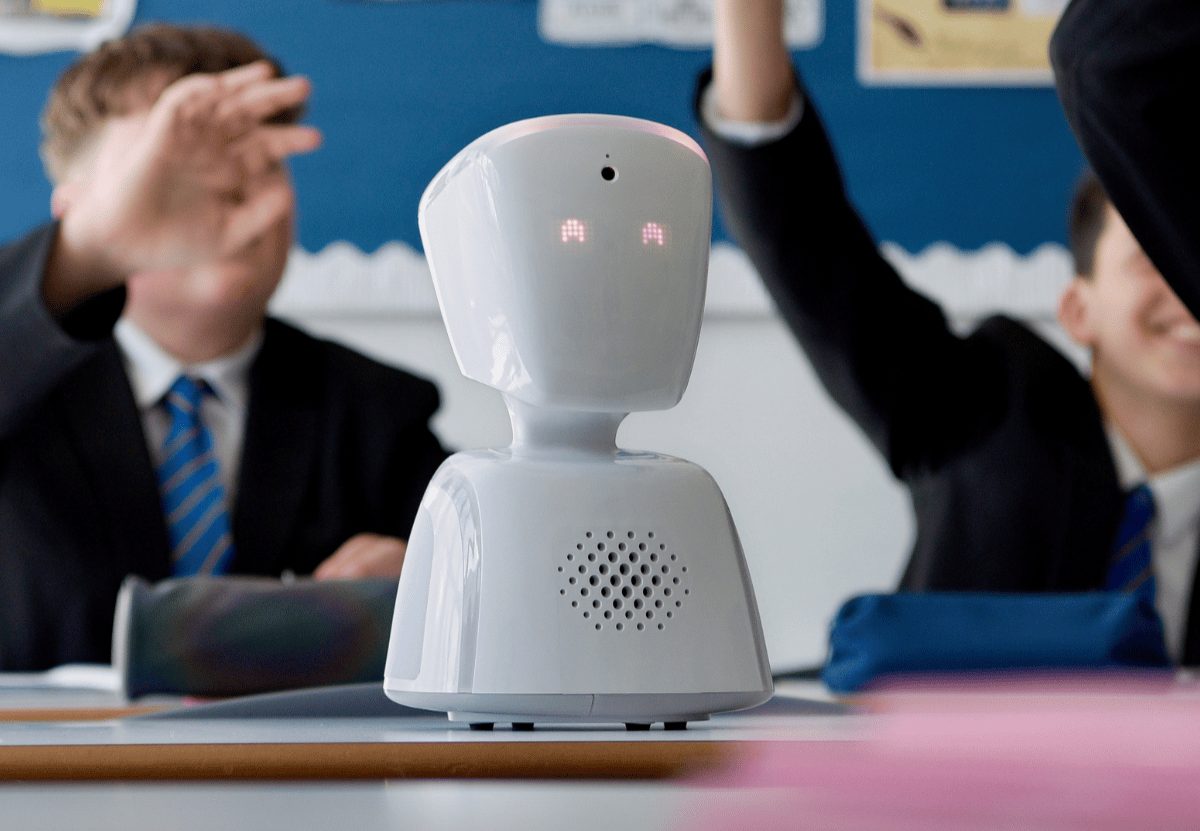
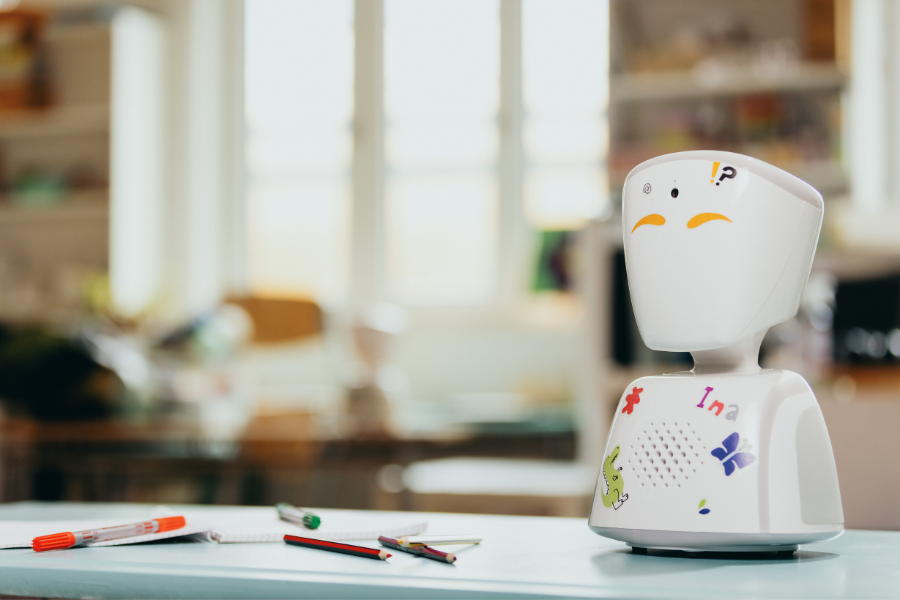
While pastoral and therapeutic support plans take shape, schools need a practical tool to stop the cycle of avoidance early. The AV1 telepresence robot acts as a bridge, sitting in the classroom being the ears, eyes and voice of the absent student.
Unlike traditional video calls, which can feel exposing, intense, and pressure-heavy, AV1 gives anxious pupils complete agency over their participation:
- Gradual, Controlled Exposure: The pupil can connect from home or a quiet space in school (such as an inclusion room). They can raise a virtual hand, speak, or simply observe quietly without turning on a camera.
- Preserving Social Identity: Classmates interact naturally with the robot for example waving, chatting during breaks, and including it in group tasks. Preserving these friendship rhythms is vital for maintaining motivation to return.
- Flexible, Phased Reintegration: AV1 supports a graduated timetable. A student might start by observing one preferred subject per day, slowly increasing virtual attendance before transitioning back to physical presence.
Implementing Telepresence for EBSNA: A Step-by-Step Practical Framework
Because EBSNA drivers are complex, introducing telepresence requires a flexible, pupil-centered approach:
1.
Implementation Stage: Low-Pressure Introduction
Recommended Pupil & School Actions: Let the pupil explore the robot in person; co-design where it will sit in class.
Pastoral Goal: Builds trust, autonomy, and a sense of control.
2.
Implementation Stage: Passive Observation
Recommended Pupil & School Actions: Allow the pupil to log on mute from home or a school quiet room for 1 preferred lesson.
Pastoral Goal: Eliminates sensory panic while preserving lesson rhythm.
3.
Implementation Stage: Graduated Connection
Recommended Pupil & School Actions: Increase virtual sessions across core subjects; enable social chats during break times.
Pastoral Goal: Preserves peer relationships and prevents academic catch-up anxiety.
4.
Implementation Stage: Physical Transition
Recommended Pupil & School Actions: Use AV1 selectively for daunting subjects while attending other lessons in person.
Pastoral Goal: Achieves full physical reintegration (77.9% average return rate. AV1 Impact Whitepaper https://www.noisolation.com/articles/av1-impact-whitepaper)
Real School Impact: Case Studies & Evidence
"AV1 provided a bridge back to the classroom, allowing students to experience lessons without physical presence, which reduced anxiety and built trust. One student, initially too anxious to enter the classroom, now attends regularly and reminds teachers to activate the AV1."
— Stephanie Jones, KS3 Student Manager & Deputy DSL, The Downs School
"The results speak for themselves: one Year 9 student had stopped attending school, but seeing and interacting with the classroom environment through AV1 gave him confidence which eventually got him back into the classroom and he's joining 90% of his timetable."
— Kirsty Berry, Assistant Head and ALNCo, St Cyres School
"I wasn't accessing school for a few months due to anxiety. When first using it I was quite nervous, but it helped me to realize that actually lessons weren't that bad, and that it did help me integrate back into class. Now I am attending school every day due to the AV1."
— George Hagen, Year 11 Student, Moulsham High School
Frequently Asked Questions
Q1: What is the difference between EBSNA and school refusal or truancy?
EBSNA (Emotionally-Based School Non-Attendance) is rooted in severe anxiety, emotional distress, or unmet needs, where a pupil typically wants to attend but feels unable to cope. Truancy or unexcused absence involves skipping school without emotional distress or parental knowledge.
Q2: How does Dan Hughes' PACE model help children experiencing school avoidance?
PACE (Playfulness, Acceptance, Curiosity, Empathy) helps educators and parents build emotional safety. By validating feelings and exploring underlying anxieties without judgment, adults can identify root causes rather than treating avoidance as bad behavior.
Q3: Why is AV1 better for anxious students than traditional video calls (like Zoom or Teams)?
Traditional video calls lock students to a static computer screen, forcing two-way camera exposure that can trigger intense pressure. In contrast, AV1 is the student’s avatar that classmates can carry anywhere; to different classrooms, group work tables, break times, and school clubs. Combined with a secure, one-way camera, AV1 gives anxious pupils complete control over their participation while keeping them part of the active school community. Importantly, none of these conferencing platforms were designed for students and teachers with safeguarding at the centre – learn more about AV1 and safeguarding.
Q4: Does using an AV1 create extra workload for teachers?
No. AV1 is designed as a simple plug-and-play tool that fits seamlessly into existing classroom routines without changing lesson plans. There is no need for any adaptation by the class teacher, no need for static teaching, teachers can float around their classroom with freedom knowing the student has full autonomy over their participation and the robot is a physical representation of them, with full view of the board, the textbook, their peers, the lesson input, or indeed any learning experience beyond the classroom doors.