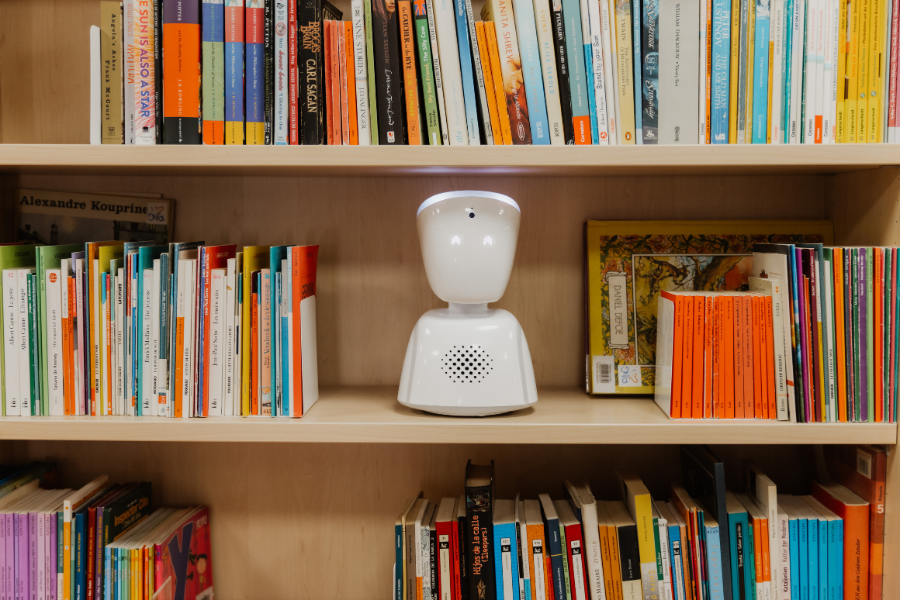
Summary: Up to 10% of students exhibit emotionally based school non-attendance, often triggered by anxiety, neurodivergence, or health challenges. Early intervention tackles these silent warning signs before full disconnection occurs. Using telepresence technology like AV1 alongside school pastoral care creates a low-friction bridge to learning, preserving classroom belonging, reducing local authority costs, and preventing long-term school absenteeism.
Understanding the Importance of Early Intervention in Schools
When a student stops attending school, it rarely happens overnight. Long before prolonged absence occurs, early warning signs emerge: subtle drops in attendance, social withdrawal, emotional overwhelm, or acute health challenges.
Expert estimates indicate that up to 10% of students temporarily display emotionally based school non-attendance. Addressing these signals immediately is the most effective way to prevent permanent school absenteeism, protect student well-being, and avoid costly crisis interventions. Research shows that children who miss the second, third and fourth day of a new term are predicted to have an overall absence rate of 43% across that term. Nearly 30 days lost. UK government figures tell us that over half of pupils who miss even one day in the first week go on to become persistently absent.
Why Timely Action Matters:
- The Escalation Cycle: Behind persistent absence lies complex distress – such as anxiety, burnout on the autism spectrum, or chronic health conditions – rather than simple lack of motivation. Left unaddressed, overwhelm escalates into full isolation.
- Preserving Classroom Belonging: When an anxious or overwhelmed student leaves the classroom, they face a dual loss: falling behind in learning and drifting away from their peer group. Maintaining continuity early prevents the feeling of becoming a "stranger" in their own class.
- Preventing High-Cost Interventions: For local authorities and school districts, unmanaged attendance cases often spiral into high-cost long-term support plans. Early stabilization protects municipal budgets while delivering better long-term outcomes for the child.
Key Warning Signs: Identifying At-Risk Students Early
Early intervention relies on spotting subtle behavioural shifts before complete attendance breakdown occurs:
- Patterned Absence: Increased micro-absences on specific days, frequent visits to the school nurse, or difficulty returning after weekends and holidays.
- Sensory or Emotional Overwhelm: Displaying signs of distress during noisy transitions, group activities, or crowded environments (particularly common in neurodivergent students).
- Academic & Social Withdrawal: Uncharacteristic drops in class participation, avoiding break times, or pulling back from peer groups.
- Physical Manifestations of Anxiety: Somatic symptoms such as headaches, stomachaches, or fatigue appearing exclusively on school mornings.
How Telepresence (AV1) Supports Early Intervention
When a student requires temporary relief from the sensory or social pressure of the classroom, removing them completely risks breaking their connection to school. The AV1 telepresence robot acts as a practical inclusion tool, providing an immediate, low-friction bridge back into the classroom.
- Low-Sensory Participation: Students experiencing sensory overload can connect to live instruction from a quiet room on site or from home, staying connected without sensory overwhelm.
- Maintained Dignity & Identity: AV1 represents the student's physical seat in the room. Classmates interact with the robot naturally during group work and breaks, preserving vital friendship rhythms.
- Immediate Deployment: AV1 requires no complex IT integration or lesson redesign. Teachers teach as normal, allowing schools to deploy support the moment warning signs appear.
Financial & Operational Value for School Leaders & Authorities
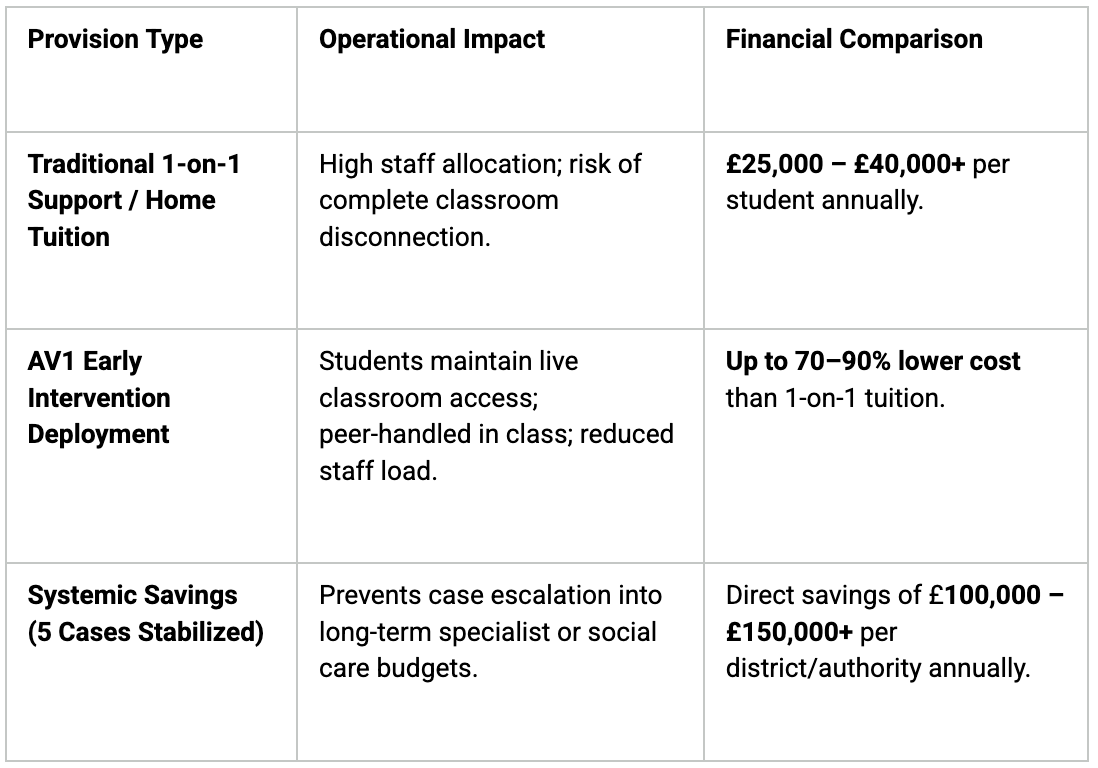
Early intervention with telepresence technology delivers significant economic and operational benefits across education systems:
Real Impact: Evidence-Based Success Stories
Preventing Crisis Escalation in Autism Spectrum Support
In a case managed by the Chemnitz Autism Center, sensory overload threatened to spiral into a complete school suspension for a student. By deploying AV1 early, the student accessed lessons from a low-sensory space while remaining fully included:
"If the avatar had been used earlier, the situation probably would not have escalated to such a head in the first place."
— Peggy Thiele, Department Head, Chemnitz Autism Center
Practical Inclusion in Daily School Practice
At the Franz-von-Lenbach Secondary School, headteacher Michael Hoyer utilizes AV1 as a core inclusion tool during early intervention phases to stabilize students facing health or emotional barriers, maintaining their class bond before absenteeism embeds.
Frequently Asked Questions
Q1: What is early intervention in the context of school attendance?
Early intervention refers to identifying early warning signs of school avoidance –such as panic, somatic illness, or minor attendance drops– and applying supportive accommodations before full, long-term school absence takes root.
Q2: How does AV1 prevent mild school avoidance from escalating into chronic absence?
AV1 keeps the student connected to their teacher’s voice, curriculum pace, and peer group during difficult periods. By removing the fear of falling behind or becoming a "stranger," it makes the eventual physical return to the classroom significantly smoother.
Q3: Can AV1 be used inside the school building for students experiencing overwhelm?
Yes. Students experiencing sensory overload or emotional dysregulation can move to an on-site quiet room or inclusion space and connect to their live lesson via AV1. This maintains curriculum access without making the student feel excluded.
Q4: Is AV1 cost-effective for local authorities and school districts?
Yes. Deploying AV1 as a preventative tool costs significantly less than 1-on-1 home tuition social care interventions. Stabilizing just a handful of escalating cases per year saves local authorities and schools substantial budget allocations.
Q5: Does using AV1 during early intervention increase teacher workload?
No. AV1 is a plug-and-play solution. Teachers deliver their live lessons as normal without needing to prepare separate work packs or set up remote software, while classmates handle moving and charging the device.