
Keep every child connected to school across your local authority
AV1 gives local authorities a scalable, cost-effective way to tackle persistent absence, support reintegration, and keep every pupil connected to learning and belonging.
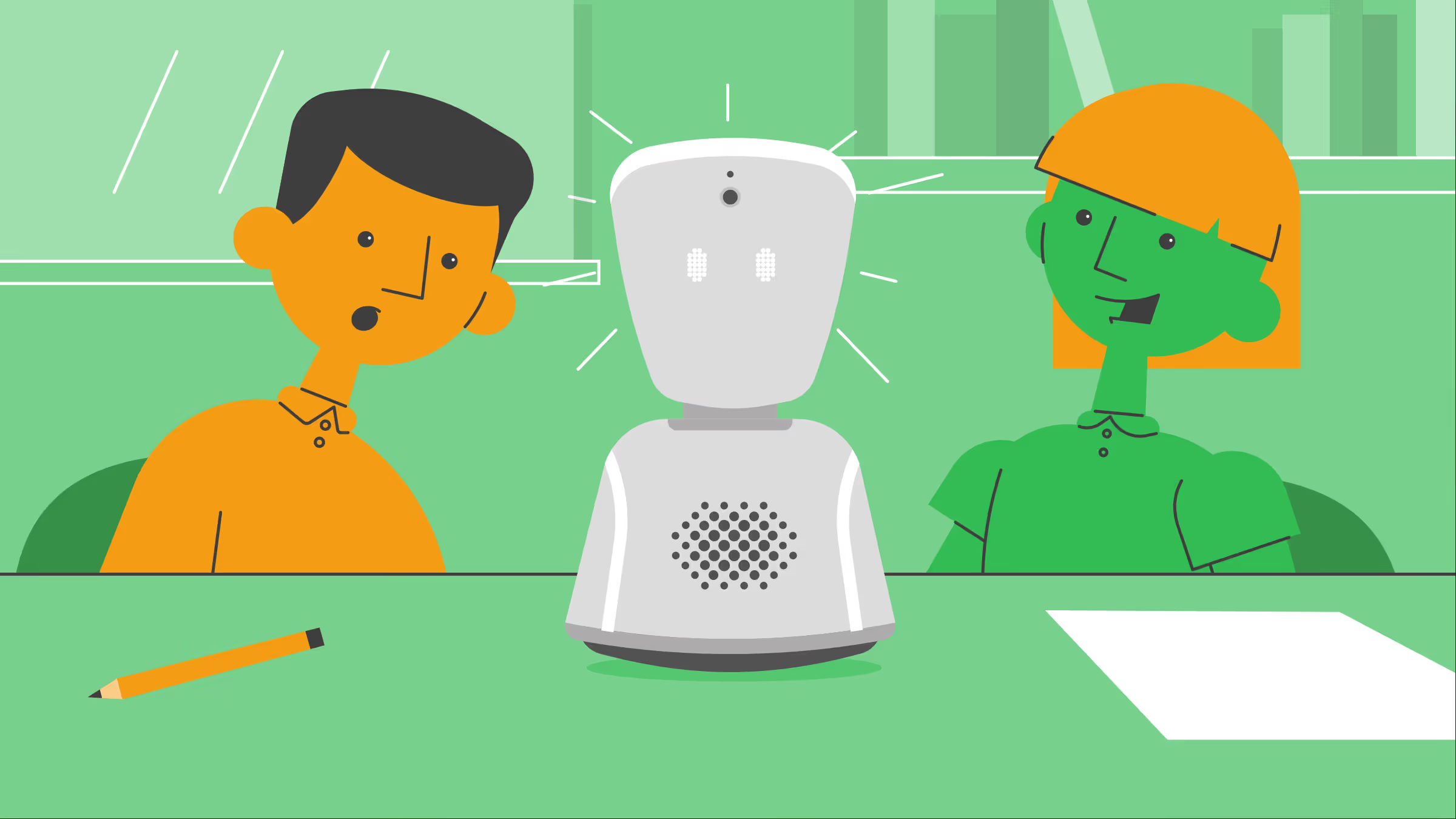

Persistent absence is reaching a tipping point
Local authorities carry a legal duty under Section 19 of the Education Act to ensure every child who cannot attend school receives a suitable education. In practice, meeting that duty is becoming harder and more expensive.
Students experiencing EBSA, long-term medical absence, and anxiety-related non-attendance are increasingly being referred to alternative provision, simply because earlier support isn’t in place.
The tools available to most authorities (such as home tutoring, AP placements, outreach services) are reactive, resource-intensive, and often poorly positioned to support reintegration. Children fall further behind and disengagement sets in.

By introducing AV1 across your authority, you can benefit from:
Real classroom participation
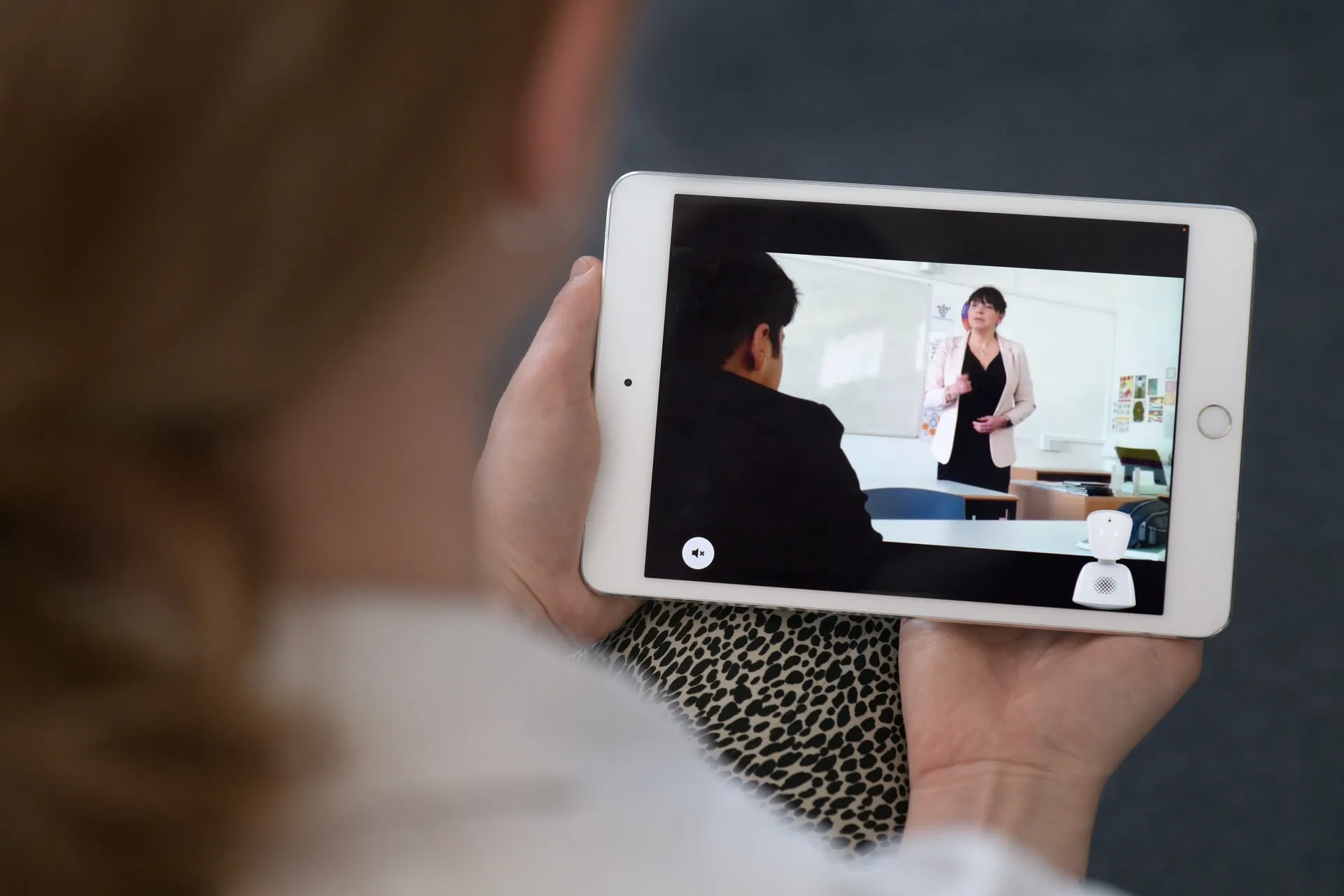
Children attend live lessons with their teachers and classmates. AV1 delivers teaching in real time rather than using recordings.
Maintaining a social connection
Friendships, routines, and belonging don't have to pause during absence. AV1 keeps pupils part of their school community.
A route back to full-time school
Rather than replacing school, AV1 supports a gradual, confident reintegration with 77.6% of deployments result in a return to in-person attendance.
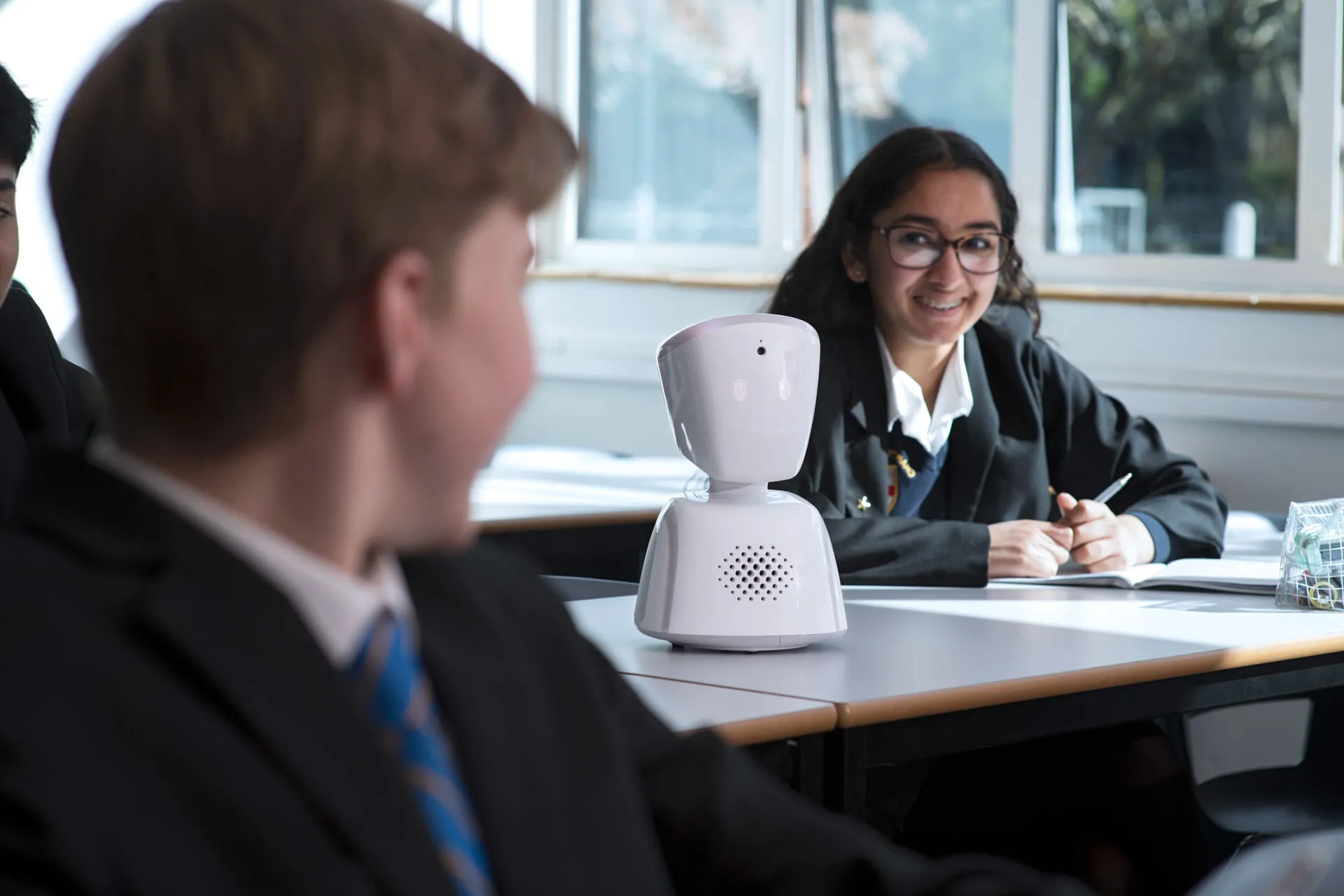
Scalable solution
Local authorities manage a central fleet and loan units to schools as needs arise.
Safeguarding built in
AV1 has been purpose-built for school settings, with robust safeguarding features including no recording or screeshotting capability, and full GDPR compliance.
It's not a video call, it's presence and inclusion
Unlike standard video conferencing, AV1 is designed specifically for the classroom. The robot sits at the child's desk, making them visible to the teacher, included in group work, and part of the everyday rhythm of school life.
The child has full control, they can look around, raise a hand, speak when ready, or simply listen. The experience is quieter and less overwhelming than being physically present, which is especially valuable for children with EBSA, anxiety, or sensory needs.
For local authorities, AV1 works best as a centrally managed resource deployed flexibly across schools as individual needs arise, with a simple referral process and no specialist IT required to get started.
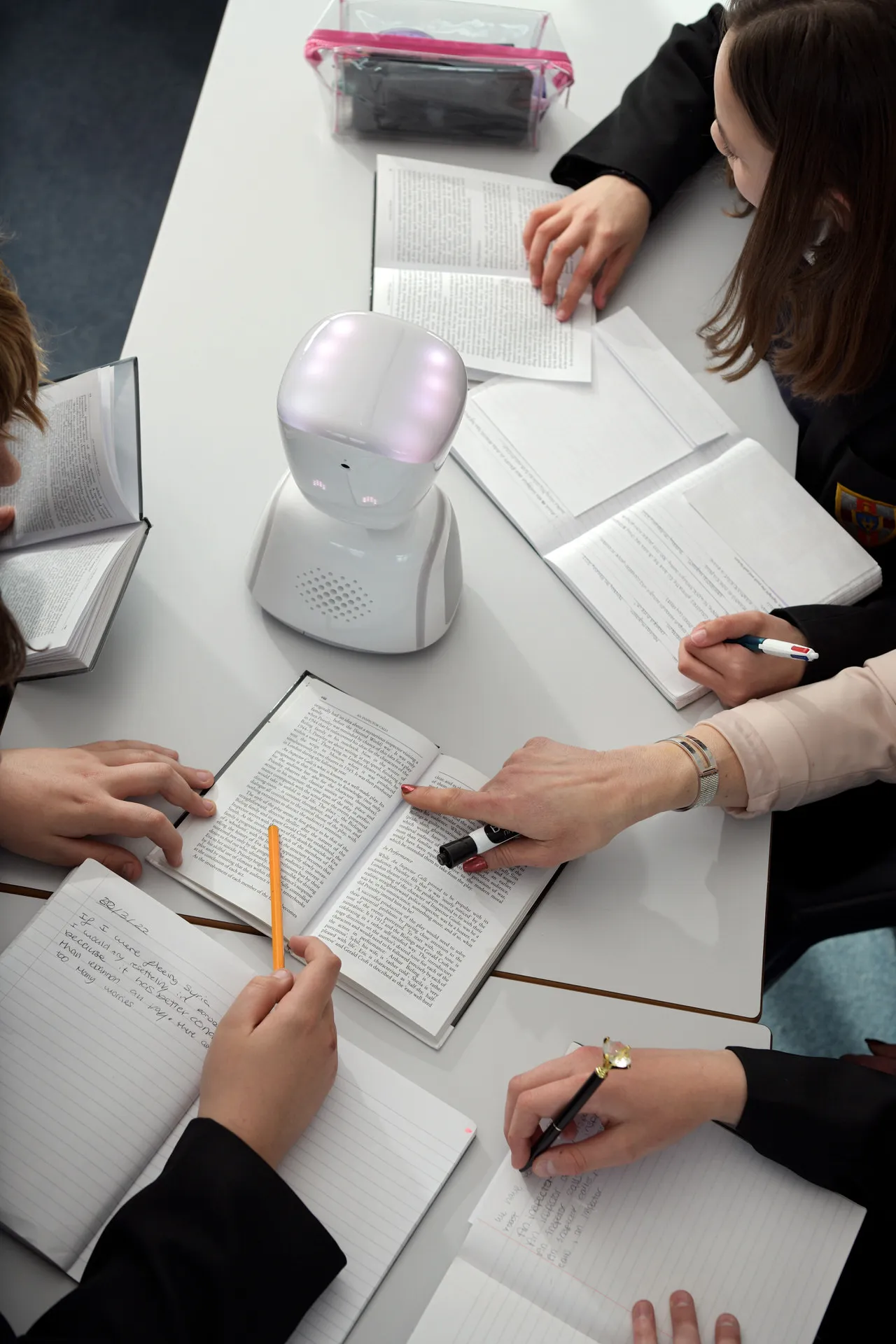
A single solution designed to deliver the outcomes that matter most to your team
Educational impact
Pupils attend real lessons with their own teacher, enabling a smoother stransition to secondary or ability to take GCSE and A-Level exams.
Works across all settings
AV1 supports primary, secondary, post-16, and SEND settings. It can also be used within school, allowing pupils o access lessons from a quieter space on-site
Cross-team resource
Many local authorities use a joined-up approach, where teams across Complex Medical Needs, Virtual School, Education Psycology, SEND, Attendance and Inclusion have access
Financial efficiency
Compared to one-to-one tuition or Online Alternative Provision, AV1 provides a significantly more cost-effective way to support pupils, at scale, in a mainstream setting.
Track impact across the authority
Usage, attendance hours, and reintegration outcomes are tracked, giving your authority clear data to report against statutory duties.
How other local authorities thrive with AV1

"AV1 doesn't just provide education — it widens the opportunity to make the child feel part of the school community. We've had some great success with it. Local authorities can go very different ways about approaching the AV1 service."

"Our section 19 provision is child centred and managed by a multi agency panel bringing together experts from across health, social care and education from within the LA and wider partners and AV1 use is one part of the support we offer.
"The AV1 allows transition to take place between levels of support and builds connection and belonging for children when they need the connection and learning from their schools the most."
.avif)
“These robots will help keep learners connected to their classrooms, peers and teachers – improving outcomes and ensuring no child is left behind.
"Alongside the clear educational benefits, this investment also represents strong value for money, helping to reduce longer-term pressures on the system.”
Meaningful results
Over 5000 AV1s are used by schools across UK and internationally. The outcomes are consistent: maintained curriculum access, improved reintegration rates and, critically, data that SENCOs can put in front of an inspector.
Recommended by the DfE
In 2019, the Department for Education funded the UK's largest telepresence trial with 90 AV1 robots across multiple schools. Results were clear: attendance improved, pupils kept up with their peers, and reintegration was faster.
Building on that evidence, the 2023 DfE guidance on children who cannot attend school formally recommends telepresence robots as a recognised and effective approach for absent pupils.
For local authorities, this matters. Using AV1 is not a novel experiment, it is a DfE-aligned practice that demonstrates strategic, evidence-led commissioning of inclusion support.
"The robots aided reintegration by enabling children and young people to have a consistent link to their classroom and their teacher." — Department for Education, 2021