
Grace College: How AV1 Supported Anxiety, Attendance and GCSE Transitions
Grace College has become a standout example of what strategic use of AV1 Robots can look like.

When Grace College in Gateshead first received their AV1 robots, Deputy SENCO Ashleigh Burnett admits she felt sceptical. New technology in classrooms can feel daunting, especially in a setting with high levels of need, complex attendance challenges and a growing number of pupils experiencing anxiety about school.
A few months later, Grace College has emerged as a leading example in Gateshead of how AV1 robots can be used effectively. Their approach is grounded in early intervention, clear processes and a commitment to keeping students connected to their own school community, even when they can’t be in the room.
A School with High Need and High Ambition
Grace College is a secondary school with a significant proportion of students requiring additional support. Around a quarter of pupils are on the SEND register and around half are eligible for Pupil Premium. Alongside this, the team are seeing increasing levels of Emotionally Based School Non Attendance (EBSNA) and anxiety around attending school.
For Ashleigh and her colleagues, this means constantly seeking flexible ways to help students access learning and feel safe enough to stay connected to school life. AV1 is one of the tools now sitting within that wider inclusion offer.
From Scepticism to Confidence
Ashleigh first encountered AV1 during a training session, seeing the robots in action for the first time. Focused training and clear safeguarding guidance helped her understand the technology and ease her initial concerns. The team were reassured that:
- AV1 cannot record or store lessons.
- The robot’s camera view can be carefully controlled through positioning.
- Students can join from home without the pressure of physically entering the building.
Gradually, what began as nervousness evolved into curiosity and then confidence, with the school logging almost 40 hours of AV1 streaming during the first half term of the academic year.
AV1 in Action for a Year 11 Student
Grace College’s first AV1 use centred on a Year 11 student experiencing severe anxiety and difficulties attending school. She had been engaging with learning from home, but not through Grace College’s own provision. Prior to this intervention, the student was not accessing any curriculum due to high anxiety and EBSA. Through AV1, she has accessed 35 hours of Maths and English remotely via the AV1, equivalent to approximately 120 lessons delivered.
With AV1 in place, she is now able to access her core GCSE subjects, English, maths and science, live from home, following the same curriculum as her peers and taught by her own teachers. This has:
- Reduced the pressure of physically attending a busy classroom.
- Helped her maintain a routine and connection in the run-up to exams.
- Ensured she can prepare more effectively for her GCSEs despite ongoing anxiety.
These outcomes represent a significant increase in engagement and access to learning, particularly for students previously unable to attend or engage with education provision. Staff recognise that Year 11 is an especially high-pressure time, even for students who attend regularly. For those already struggling with EBSNA, the step into an exam year can heighten anxiety further. AV1 is giving this student a way to stay part of the cohort without facing an “all or nothing” choice between full attendance and full absence.
Building a Safe Hub-Based Pathway
Grace College are now moving beyond a single use case to embed AV1 more strategically within their Hub provision. The plan is simple but powerful. When a student cannot access a mainstream lesson on a particular day, the AV1 will be placed in the classroom while the student joins from the Hub, a calmer, more predictable space on site. This creates a “safe zone” that still keeps them connected to:
- Their usual teachers.
- Their classmates.
- The flow and rhythm of lessons.
The team are also exploring AV1’s role within their reflection room. Rather than removing a student from learning as part of behaviour management, the robot allows staff to address the behaviour while preserving access to the lesson. In other words, they can isolate the behaviour, not the child.
Whole-Staff Briefing and Clear Communication
A key ingredient in Grace College’s success has been deliberate, whole school communication. A full staff briefing covered safeguarding and privacy, how AV1 works in practice, classroom expectations and routines and how to position the robot to protect staff and pupils. Ashleigh then followed up by sharing the AV1 training video with staff, ensuring those who couldn’t attend in person still had access to the same information.
Scaling from One Pupil to a Whole-School Resource
What started with a single Year 11 student has quickly expanded.
- Robots in use: 4 supporting students who are unable to attend school.
- Total streaming time: 54 hours.
Their focus now is on using AV1 early for students showing signs of EBNSA, offering a graded pathway from home to Hub to classroom, and embedding the robots within existing SEND and inclusion processes. By starting small, building strong foundations, and securing buy-in before expanding, their deliberate approach is now showing results.
A Blueprint for Gateshead
Grace College’s approach and structured oversight have turned AV1 from a gadget into a strategic inclusion tool. Key elements of their model include:
- Clear ownership – AV1 sits within SEND leadership, with Ashleigh providing day-to-day oversight.
- Whole-staff onboarding – everyone has heard the “why,” seen the robot in action and had safeguarding questions answered.
- Planned pathways – AV1 use is mapped to real-world routes back into learning: from home, to Hub, to mainstream.
- Behaviour-informed practice – using AV1 to maintain access to learning, even when behaviour needs addressing elsewhere.
- Early intervention – viewing AV1 as a preventative tool for emerging EBSA and complex needs, not just a crisis response.
For other Gateshead schools and settings, this offers a practical model to adapt and build on.
Advice for Other Schools
When asked what she would say to other schools considering AV1, Ashleigh’s message is straightforward: “Try it. Just try it.”
She acknowledges that the beginning can feel “tough” because everything is new and unfamiliar. But once staff understand how AV1 works, see how easy it is to operate and witness its impact for students who can’t access lessons in the usual way, it quickly becomes a valuable part of the toolkit.
The Bottom Line
When used intentionally, AV1 Robots can become a powerful inclusion tool - grounded in clear communication, strong safeguarding and a commitment to belonging.
Grace College are supporting a vulnerable Year 11 student towards GCSEs, preparing to offer safe Hub-based access for others and reshaping the reflection room to protect both learning and relationships. In doing so, they have created a model of best practice that can help guide the wider rollout of AV1 across Gateshead – early intervention, not isolation, and a steady pathway back to feeling part of school again.

Ask us about AV1 for your local authority, academy or school.
Contact sales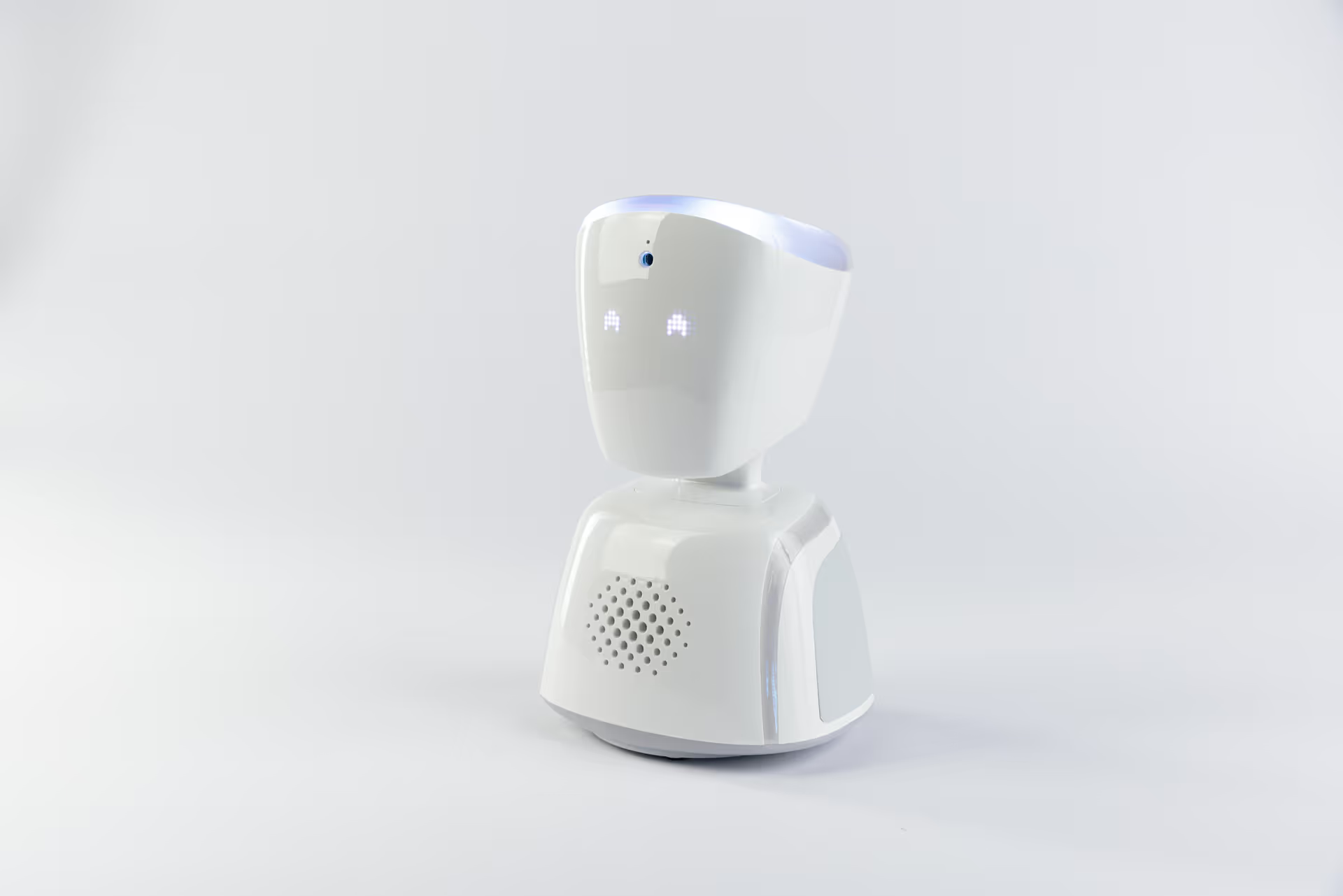
.jpeg)

.png)