
EBSA Support for Schools with AV1: Helping Students Re-engage with Education
When a pupil can't walk through the school gate or enter the classroom, the risk isn't just missed lessons, it's the slow erosion of everything that makes coming back feel possible.
AV1 helps schools maintain the relationships, routines, and learning that prevent emotionally based school avoidance from becoming permanent absence.

EBSA is not a behaviour problem, and it cannot be solved like one
Emotionally Based School Avoidance is one of the most complex and rapidly growing challenges in UK schools today. Pupils with EBSA typically want to attend, but experience genuine, often debilitating anxiety that makes the school environment feel unsafe or overwhelming.
The causes vary: social anxiety, sensory sensitivities, academic pressure, a difficult transition, unmet SEND needs, or a cluster of smaller stressors that have compounded over time. What they share is a pupil in distress and a school under pressure to respond.
Enforcement-led approaches rarely work. Punitive measures typically heighten anxiety and make return harder. What these pupils need is a pathway back and one that keeps them connected to school life while the wider support plan takes shape.

The longer a pupil is away, the harder it becomes to return
Peer relationships drift
Friendships move on. Shared references, social dynamics, all of it shifts while the absent pupil remains stuck at the point they left. When they return, they feel like a stranger in a room they used to belong in.
Anxiety fills the gap
Without regular exposure to the school environment, anxiety around it grows. Every day away reinforces the belief that school is difficult to cope with. The idea of returning becomes progressively more frightening.
Routine collapses
Without the rhythm of a school day, sleep shifts, motivation drops, and the mental gap between home and school widens. Rebuilding routine from scratch is significantly harder than maintaining it.

Learning falls behind
Even with work sent home or online resources, pupils without real-time classroom access typically fall behind. When they return, academic catch-up adds more anxiety.
Stopping the cycle early
Schools need an intervention that breaks the cycle of EBSA early on, one that maintains the connection to teachers, peers and learning. That is what AV1 does.
AV1 is a bridge back into school that doesn't require them to be there, yet
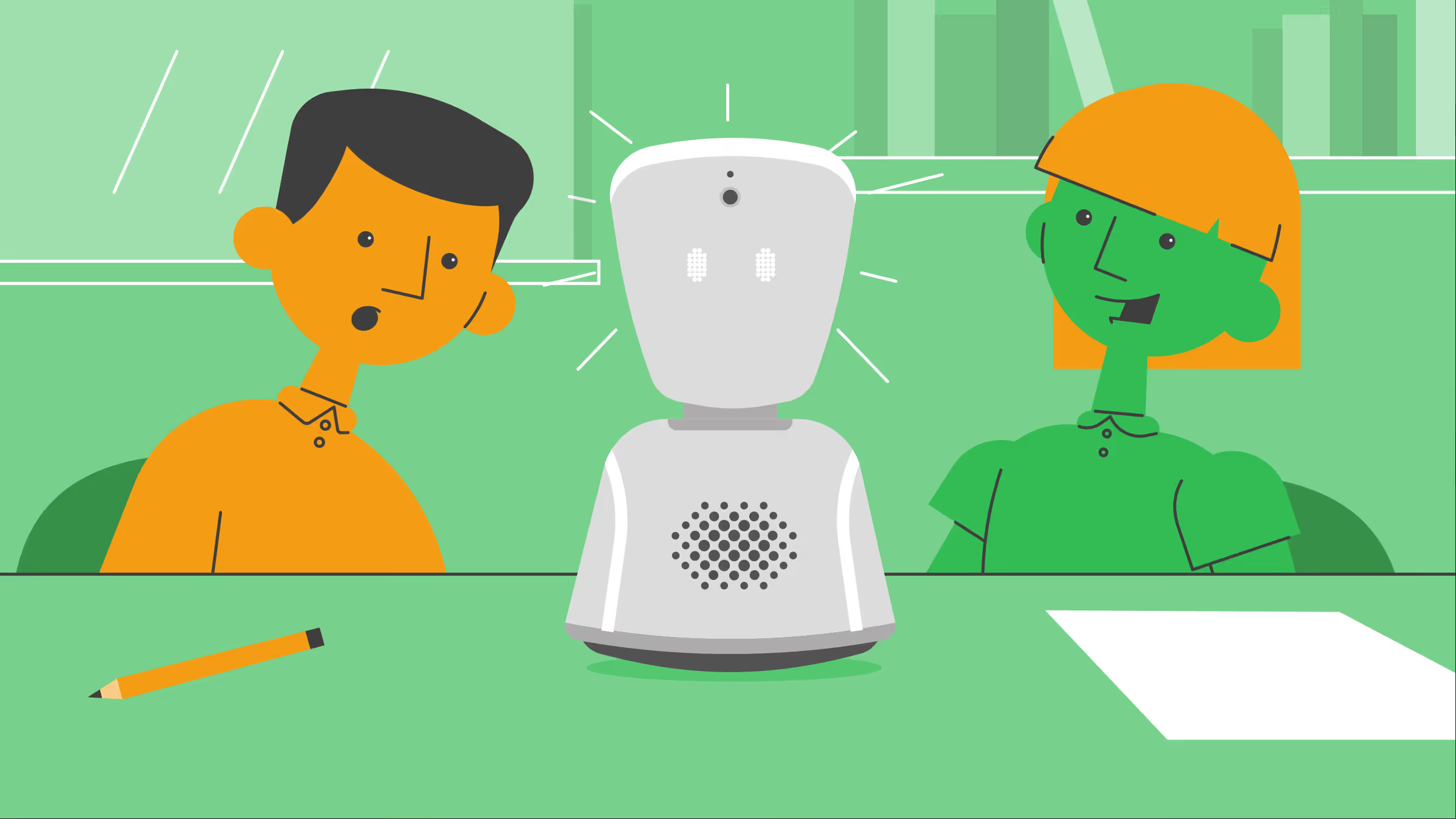
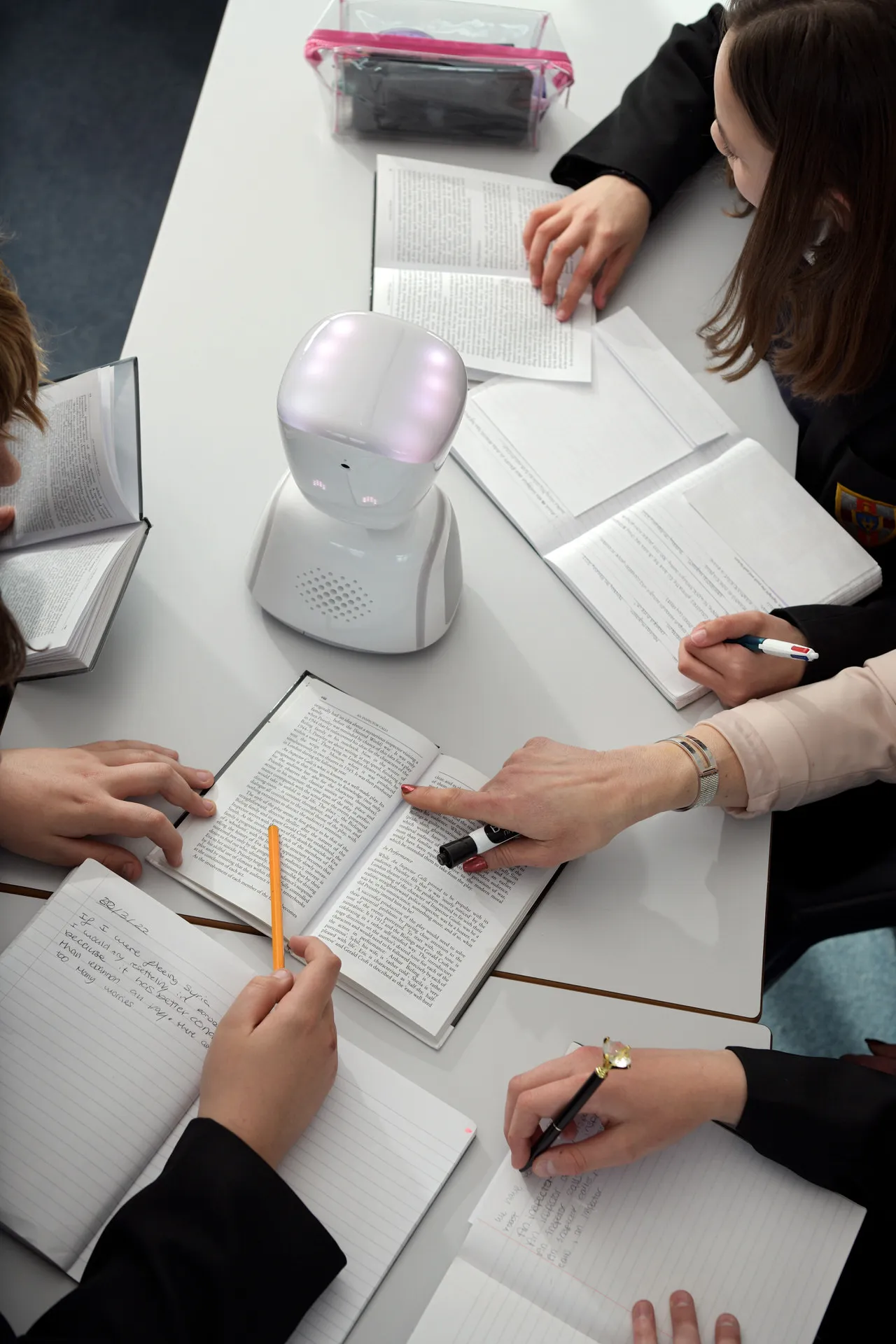
AV1 is a small telepresence robot that sits in the classroom in the pupil's place. The pupil connects from wherever they are, whether it is at home, a quiet room elsewhere in the building, or another safe space. AV1 allows them to see and hear everything happening in class, in real time.
For pupils with EBSA, the distinction between AV1 and a video call matters enormously. A video call can feel exposing and pressured. AV1 gives pupils control: they choose when to be seen, when to speak, when to simply listen and observe. That lower-pressure presence is often exactly what an anxious pupil needs to stay connected.
AV1 does not replace pastoral support or therapeutic intervention. It works alongside those things, filling the gap that currently exists between a pupil being absent or present in the classroom.
Flexible, low-friction, and built around the pupil's readiness
Early-stage absence
The pupil connects to live lessons from home, staying familiar with classroom routines, vocabulary, and pace. Teachers teach as normal. No extra planning or separate resources.
On site, low pressure
A pupil who can get to school but cannot enter the classroom connects via AV1 from a quiet room. This means they are still present and learning, without sensory or social pressure.
Phased return support
As part of a graduated reintegration plan, AV1 is used selectively for the lessons a pupil can manage. When they return, they know the teacher's voice, the pace, and the people.

Maintaining social bonds
Classmates interact with the robot naturally. They wave, chat to it, include it in small group tasks. The social bonds that matter so much to a pupil's motivation to return are preserved, not left to decay.
No disruption to teaching
Teachers teach as normal. Within days, the routine becomes predictable. For many schools, AV1 stops feeling like technology altogether and it becomes just another pupil in the room.
Proven Impact of AV1 for EBSA in Practice

"The results speak for themselves: one Year 9 student had stopped attending school, but seeing and interacting with the classroom environment through AV1 gave him confidence which eventually got him back into the classroom and he's joining 90% of his timetable.
Another student in Year 10 joins lessons through an AV1 robot when they are in too much pain to attend school in person".

"For the year 8 student, the AV1 showed them they could get to lessons. With a bit of perseverance and helping them to understand that setbacks are normal, they have now attended all of their Maths and English lessons.
For the year 7, AV1 showed them that the classroom need not be a scary place. It helped them to transition back into English lessons and even helped them to get into Maths and Science as well."
"I wasn't accessing school for a few months due to anxiety.
When first using it I was quite nervous about it. But it helped me to realise that actually lessons weren't that bad, and that it did help me to integrate back into class.
Now I am attending school every day due to the AV1."
Results schools can demonstrate
Over 5000 AV1s are used by schools across UK and internationally. The outcomes are consistent: maintained curriculum access, improved reintegration rates and, critically, data that SENCOs can put in front of an inspector.